Sanskrit Pronunciation for Mantra Chanting — A Practical Beginner's Guide
Learn the Sanskrit sounds that matter most for chanting: vowel length, aspirated consonants, retroflex vs dental, visarga and anusvara — with four mantras broken down syllable by syllable in Devanagari, IAST and plain phonetics.
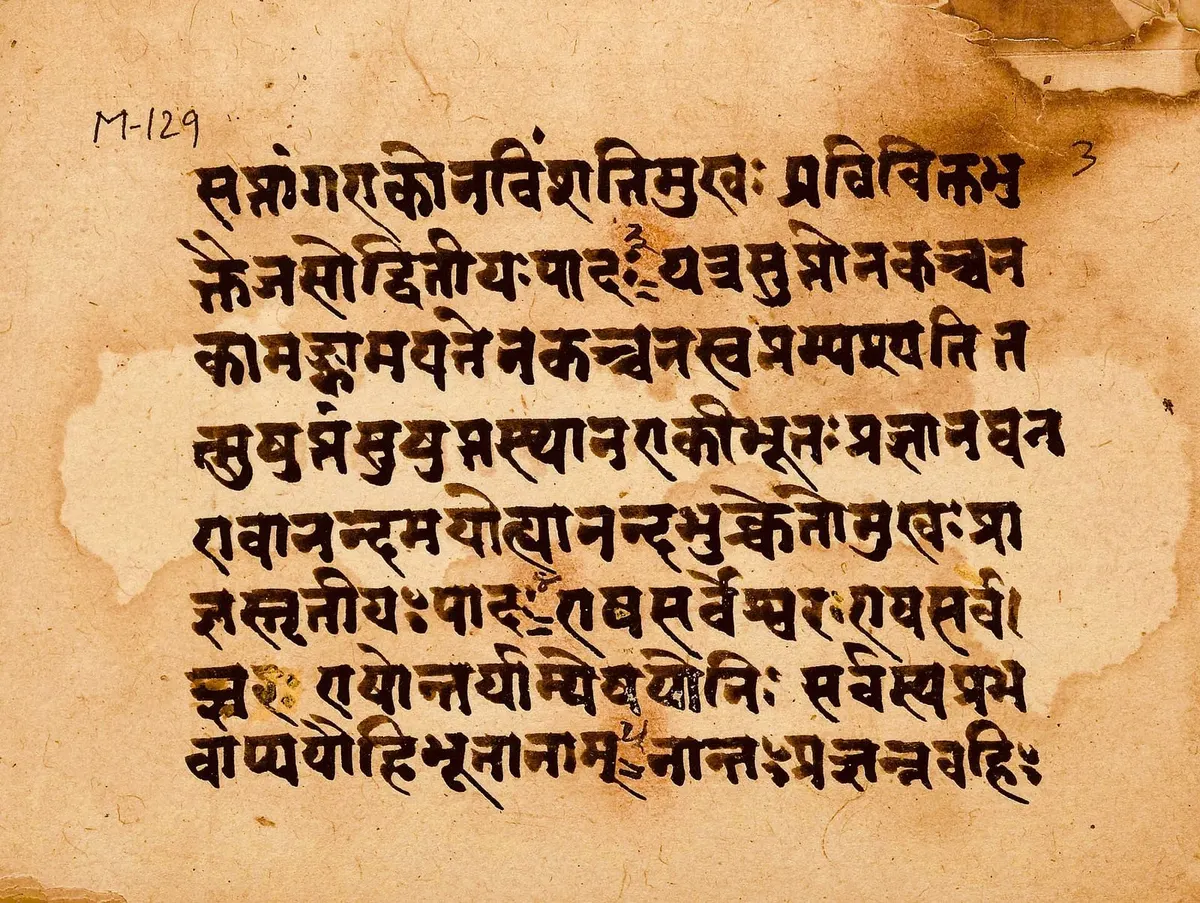
Most of us learned our first mantras by ear — from a grandmother, a temple loudspeaker or a recording — and picked up small errors that nobody corrected. This guide explains the handful of Sanskrit sounds that actually matter for chanting, then breaks four common mantras down syllable by syllable so you can check yourself.
Why Pronunciation Matters — and Why You Should Not Panic
In the Vedic tradition a mantra is first of all a sound. Its meaning matters, but the sound itself is treated as carrying the power, which is why the science of correct pronunciation, Śikṣā, is counted as one of the six Vedāṅgas — the “limbs” of the Veda a student had to master before studying the texts themselves.
At the same time, the Bhakti tradition is equally clear that sincerity outweighs polish. Saints across India — Tukaram in Marathi, Mirabai in Rajasthani, Ramprasad in Bengali — chanted the divine name in their own regional accents, and nobody suggests their devotion fell short. Every Indian language colours Sanskrit slightly, and these are living traditions, not mistakes to be ashamed of.
So the aim of this guide is modest: get the sounds that change meaning or metre right — above all vowel length — and let the rest improve gradually. A mantra chanted daily with a few imperfections is worth far more than a perfect one chanted never.
The Vowels — Where Most Errors Happen
If you learn only one thing from this article, learn this: Sanskrit distinguishes short and long vowels, and a long vowel is held roughly twice as long as a short one. English does not mark this consistently, so English speakers (and many Hindi speakers) flatten every “a” to the same length, which changes both the rhythm of a mantra and, sometimes, its meaning.
| Devanagari | IAST | Approximate English sound |
|---|---|---|
| अ | a | the “u” in “but” — short, never “ah” |
| आ | ā | the “a” in “father”, held twice as long |
| इ | i | the “i” in “sit” |
| ई | ī | the “ee” in “seen” |
| उ | u | the “u” in “put” |
| ऊ | ū | the “oo” in “moon” |
| ऋ | ṛ | a vocalic “r”, usually said “ri” in the north and “ru” in Maharashtra and the south — as in Kṛṣṇa |
| ए | e | the “a” in “gate”, but pure with no glide — always long |
| ऐ | ai | the “i” in “kite” (many Hindi speakers say a long “e” as in “bet”) |
| ओ | o | the “o” in “go”, pure with no glide — always long |
| औ | au | the “ow” in “cow” |
Notice that e and o are always long in Sanskrit. There is no short “e” or “o”, so deva is “day-va”, not “deh-va”, and yo rhymes with “go”.
In IAST (the standard Roman transliteration used here), the line over a vowel marks length. A mantra written without diacritics gives you no way to tell “a” from “ā”, which is why plain spellings like “Om Namah Shivaya” hide the most important information.
The Consonants — Five Groups
Sanskrit organises its stop consonants into five groups, or vargas, by where the tongue touches. Each group has the same five-column pattern: unvoiced, unvoiced aspirated, voiced, voiced aspirated, and nasal.
| Varga | Devanagari | IAST | Where the sound is made |
|---|---|---|---|
| Velar (kaṇṭhya) | क ख ग घ ङ | ka kha ga gha ṅa | back of the tongue against the soft palate |
| Palatal (tālavya) | च छ ज झ ञ | ca cha ja jha ña | middle of the tongue against the hard palate |
| Retroflex (mūrdhanya) | ट ठ ड ढ ण | ṭa ṭha ḍa ḍha ṇa | tongue tip curled back to the roof of the mouth |
| Dental (dantya) | त थ द ध न | ta tha da dha na | tongue tip against the back of the upper teeth |
| Labial (oṣṭhya) | प फ ब भ म | pa pha ba bha ma | the lips |
Three points cause most of the trouble.
Aspirated vs unaspirated
The second and fourth columns are the first and third with a puff of breath added. Kha is ka plus breath; bha is ba plus breath. Two aspirates are routinely mispronounced by English speakers:
- pha (फ) is not the English “f”. It is a “p” followed by breath, roughly the “p-h” in “uphill” said quickly. Phala (fruit) starts with a p, not an f.
- tha (थ) is not the English “th” of “think”. It is a dental “t” with breath. The “th” in tathā or sthira never sounds like “thin”.
Likewise the palatal ca (च) is always the “ch” of “chair”, never the “k” of “cat” or the “s” of “cell”. Pracodayāt is “pra-cho-da-yaat”.
Retroflex vs dental
English “t” and “d” are made with the tongue just behind the teeth, which is neither of the Sanskrit positions. The dental ta/da (त/द) are softer, with the tongue touching the teeth — like Spanish or Italian “t”. The retroflex ṭa/ḍa (ट/ड) are made with the tongue curled back and sound harder; they are the sounds Indian languages hear in English “t” and “d”. In IAST the dot underneath marks retroflex. Gaṇapataye has a retroflex ṇ and a dental t in the same word.
The three sibilants
- ś (श) — palatal, the “sh” of “ship”: Śiva, śānti
- ṣ (ष) — retroflex, a “sh” with the tongue curled back: Kṛṣṇa, puṣṭi
- s (स) — plain dental “s”: savitur, sugandhiṃ
To an untrained ear ś and ṣ sound nearly identical, and treating both as “sh” is entirely acceptable for a beginner. The error to avoid is turning either one into a plain “s”.
Visarga, Anusvara and Virama
Visarga (ः, ḥ) is a light breath that echoes the vowel before it, heard at the end of a word before a pause. So namaḥ sounds like “namaha”, svaḥ like “svaha”, and bhuvaḥ like “bhuvaha”. The echo is short and unstressed — not a full extra syllable shouted out. In the middle of a phrase it is lighter still.
Anusvara (ं, ṃ) is a nasal sound. Before a consonant it takes the nasal of that consonant’s group (so saṃskṛta is heard as “sanskrita”); at the end of a phrase, as in the bīja gaṃ, it is a hummed “m” with the lips closed. Chandrabindu (ँ) nasalises the vowel itself without closing the lips; it is common in Hindi but rare in everyday mantras.
Virama or halanta (्) is the small stroke that removes a consonant’s built-in “a”. Every Devanagari consonant carries an inherent short a: क is ka, and only क् is a bare k. This is how conjuncts are built (त्र्य in tryambakaṃ is t + r + ya) and how words end without a vowel (pracodayāt ends in a bare t, marked प्रचोदयात्).
”Ram” or “Rāma”? “Shiv” or “Śiva”?
Hindi, Marathi, Punjabi and several other languages naturally drop the final short a of Sanskrit words: Rāma becomes Ram, Śiva becomes Shiv, Gaṇeśa becomes Ganesh. Sanskrit itself, and southern-language usage, keeps it. Neither is wrong — hundreds of millions of devotees use each form, and the great Hindi bhakti poets wrote “Ram”.
The only practical rule: when you chant a Sanskrit mantra, keep the final vowels, because the metre depends on them. Oṃ namaḥ śivāya has the “a” at the end; dropping it breaks the rhythm. In ordinary speech and in Hindi bhajans, say the name the way your community says it.
Four Mantras, Syllable by Syllable
The phonetic column uses ordinary English spelling with doubled vowels for length (“aa”, “ee”, “oo”). Capitals mark long vowels within a syllable, not stress — Sanskrit has no strong stress accent, so keep syllables even.
1. Oṃ namaḥ śivāya
Devanagari: ॐ नमः शिवाय
| Syllable | IAST | Say it |
|---|---|---|
| ॐ | oṃ | om (long o, hummed m) |
| न | na | nu (short, as in “nut”) |
| मः | maḥ | ma-h(a) — light echo |
| शि | śi | shi (short) |
| वा | vā | vaa (long) |
| य | ya | ya (short) |
The most common error is a short “va” — śivāya has one long vowel, and it is the “ā” in the middle. Read the full guide to this mantra in Benefits of Chanting Om Namah Shivaya.
2. Oṃ gaṃ gaṇapataye namaḥ
Devanagari: ॐ गं गणपतये नमः
| Syllable | IAST | Say it |
|---|---|---|
| ॐ | oṃ | om |
| गं | gaṃ | gum (short a, nasal hum) |
| ग | ga | gu (short) |
| ण | ṇa | nu — tongue curled back |
| प | pa | pu (short) |
| त | ta | tu — tongue on teeth |
| ये | ye | yay (long e, no glide) |
| न | na | nu |
| मः | maḥ | ma-h(a) |
Every vowel in gaṇapataye is short except the final e. Keep the four syllables ga-ṇa-pa-ta even and quick; do not stress “pa” the way English would. More on this mantra in Ganesh Mantras, Aarti and Their Significance.
3. The Gayatri mantra
Devanagari: ॐ भूर्भुवः स्वः तत्सवितुर्वरेण्यं भर्गो देवस्य धीमहि धियो यो नः प्रचोदयात्
| Line | IAST | Say it |
|---|---|---|
| 1 | oṃ bhūr bhuvaḥ svaḥ | om bhoor bhu-va-h(a) sva-h(a) |
| 2 | tat savitur vareṇyaṃ | tut sa-vi-tur va-ren-yum |
| 3 | bhargo devasya dhīmahi | bhar-go day-vas-ya dhee-ma-hi |
| 4 | dhiyo yo naḥ pracodayāt | dhi-yo yo na-h(a) pra-cho-da-yaat |
Points to watch:
- bhūr is long, bhuvaḥ is short — they are different vowels.
- savitur: both the i and the u are short. “Sa-vee-tur” is a common error.
- vareṇyaṃ has a retroflex ṇ. In Vedic recitation it is often sung as four syllables, va-re-ṇi-yaṃ, to complete the metre; either is accepted.
- bhargo, dhīmahi, dhiyo: the bh and dh are aspirated. dhīmahi has a long ī; dhiyo has a short i.
- pracodayāt: “ch”, long ā, and a bare final t with no vowel after it.
The meaning and history are covered in Gayatri Mantra — Meaning and Benefits.
4. The Mahamrityunjaya mantra
Devanagari: ॐ त्र्यम्बकं यजामहे सुगन्धिं पुष्टिवर्धनम् उर्वारुकमिव बन्धनान्मृत्योर्मुक्षीय मामृतात्
| Line | IAST | Say it |
|---|---|---|
| 1a | oṃ tryambakaṃ yajāmahe | om tryum-ba-kum ya-jaa-ma-hay |
| 1b | sugandhiṃ puṣṭi-vardhanam | su-gan-dhim push-ti-var-dha-num |
| 2a | urvārukam iva bandhanān | ur-vaa-ru-kum i-va ban-dha-naan |
| 2b | mṛtyor mukṣīya māmṛtāt | mrit-yor muk-shee-ya maam-ri-taat |
Points to watch:
- tryam is a single syllable: t, r and y run together before the vowel. “Tri-yam-ba-kam” adds a syllable that is not there.
- yajāmahe has a long ā and ends in a long e.
- puṣṭi: retroflex ṣ and ṭ together — “push-ti” with the tongue curled back.
- mṛtyor and māmṛtāt: the vocalic ṛ, said “mri”. māmṛtāt has two long ā’s.
- bandhanān ends in a long ā followed by a bare n; vardhanam ends in a bare m.
For the meaning and the way this mantra is used, see the Mahamrityunjaya Mantra Guide.
Eight Common Mispronunciations
| Often heard | Closer to Sanskrit | What is going wrong |
|---|---|---|
| ”Shi-va-ya” with all short vowels | śi-VAA-ya | the ā is long |
| ”Shanty” for śānti | shaan-ti | long ā, short i |
| ”Tri-yam-ba-kam” | tryam-ba-kam | tryam is one syllable |
| ”Bar-go” for bhargo | bhar-go | bh is aspirated — add the breath |
| ”Sa-vee-tur” | sa-vi-tur | the i is short |
| ”Pra-ko-da-yat” | pra-cho-da-yaat | c is always “ch”; final ā is long |
| ”Su-gan-dim” | su-gan-dhim | dh is aspirated |
| ”Krish-naa” with a long final a | kṛṣ-ṇa | final a is short; ṣṇ is retroflex |
How to Practise
- Listen to a reliable source. Recordings by traditional reciters (pathashala-trained priests, or a teacher you trust) are better models than film versions, which often stretch or drop syllables for the tune.
- Mark your text. Write out the mantra in IAST and underline every long vowel. Most errors vanish once you can see where the length is.
- Repeat slowly, one line a day. Chant at half speed, exaggerating the long vowels and the aspirates, until the line is comfortable. Only then move to the next.
- Record yourself and compare. Your phone’s voice recorder is enough. Played back to back with the model, the differences are obvious in a way they never are while you are speaking.
- Return to normal speed only when the slow version is clean. Speed hides errors; slowness reveals them.
- Find a teacher if you can. Even one or two sessions with someone who chants well will catch habits you cannot hear in yourself.
Once the pronunciation is settled, the mechanics of daily repetition are covered in How to Do Naam Jaap Correctly. Longer texts such as the Vishnu Sahasranama are best learned the same way, a few lines at a time.
Frequently Asked Questions
Will I be harmed if I mispronounce a mantra?
The tradition tells cautionary stories about wrongly accented words in Vedic ritual, but those concern formal yajña performed by trained priests, not personal devotional jaap. For ordinary chanting, the consistent teaching of the bhakti saints is that sincerity is what counts. Improve your pronunciation because it deepens the practice, not out of fear.
Should I say “Ram” or “Rāma”?
In conversation and in Hindi bhajans, say what your family and community say. Inside a Sanskrit mantra, keep the final “a” so the metre holds. Both forms are legitimate and widely used.
Do I need to learn Devanagari?
It helps but is not required. IAST with diacritics carries all the information you need — vowel length, retroflex dots, aspiration — and is what this article uses. The one thing to avoid is relying on plain Roman spellings that hide vowel length until you already know the sounds.
Is “Om” pronounced “Aum”?
ॐ is written as a single syllable with a long “o” and a hummed “m”. The traditional analysis into a-u-m describes its symbolic components rather than three separate sounds. In practice, chant a long, pure “o” that closes into a nasal hum. Both “Om” and “Aum” are heard everywhere and neither is wrong.
My regional accent changes some sounds. Is that wrong?
No. Bengali “b” for “v”, the Tamil handling of aspirates and the Hindi dropped final vowel are all centuries-old ways of chanting Sanskrit. Concentrate on vowel length and syllable count, which affect the metre, and let the rest follow naturally.
Related reading
Start your digital sadhana today.
Track your mantra practice with our free Naam Jaap Counter.
Open Naam Jaap Counter →