Benefits of Chanting Om Namah Shivaya Daily
The Panchakshara mantra carries deep meaning in each syllable. Discover the spiritual, mental, and physical benefits of daily practice.
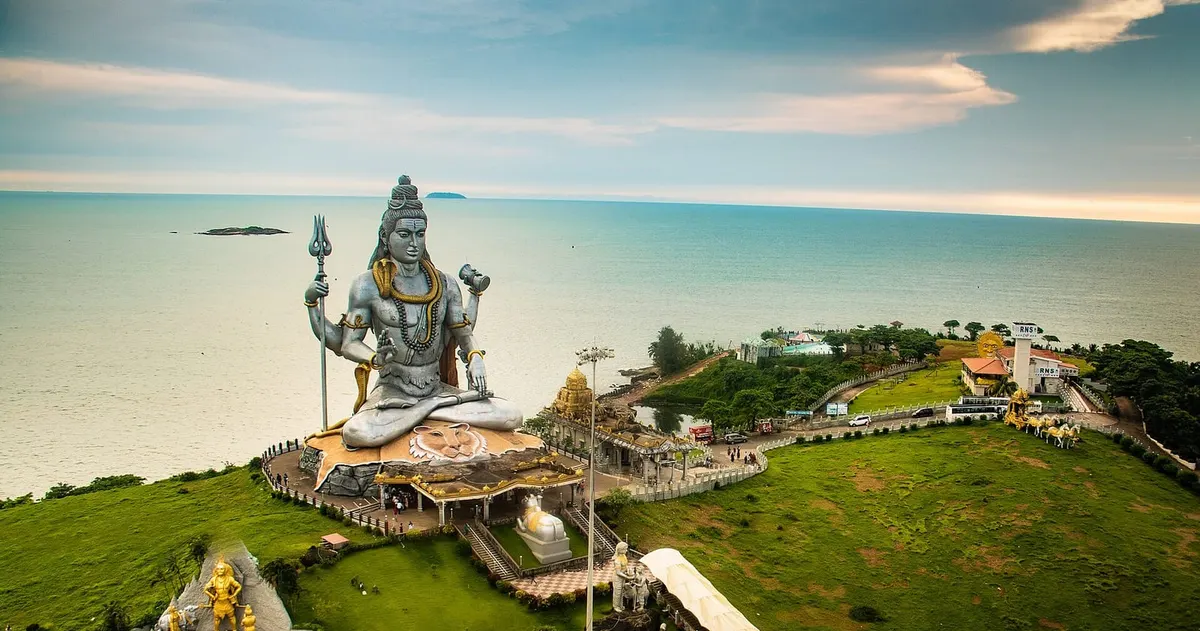
Om Namah Shivaya — five sacred syllables that have echoed through temples, caves, and homes for thousands of years. This Panchakshara (five-syllable) mantra is the maha mantra of Lord Shiva and one of the most powerful mantras in the Hindu tradition.
The Meaning of Each Syllable
The five syllables — Na, Ma, Shi, Va, Ya — correspond to the Pancha Bhoota (five elements):
| Syllable | Element | Quality |
|---|---|---|
| Na | Earth (Prithvi) | Grounding, stability |
| Ma | Water (Jala) | Fluidity, purification |
| Shi | Fire (Agni) | Transformation, energy |
| Va | Air (Vayu) | Movement, life force |
| Ya | Space (Akasha) | Expansion, liberation |
When prefixed with Om (the primordial sound), the mantra connects the individual consciousness to the universal consciousness through Shiva — the Supreme Being who is both the destroyer and the regenerator.
The literal translation: “I bow to Shiva” — but the deeper meaning is: “I bow to my inner Self, the divine consciousness that pervades all.”
Spiritual Benefits
1. Purification of the Mind
The Shiva Purana states that regular chanting of Om Namah Shivaya dissolves negative samskaras (mental impressions) accumulated over lifetimes. Each repetition acts like a fire that burns away the dross of the mind.
2. Awakening of Inner Consciousness
The mantra activates the Ajna Chakra (third eye center), sharpening intuition and inner awareness. Advanced practitioners report a deepening sense of witnessing consciousness — the ability to observe thoughts without being consumed by them.
3. Liberation (Moksha)
The Shiva Rahasya describes the Panchakshara as the “boat that carries the soul across the ocean of samsara.” Regular practice is said to gradually loosen the bonds of maya and lead to ultimate liberation.
4. Connection with Shiva Tattva
Shiva is not merely a deity — Shiva is the fundamental consciousness from which all creation arises. Chanting His name aligns your individual awareness with this cosmic principle.
Mental and Emotional Benefits
Reduced Anxiety and Stress
The rhythmic repetition of the mantra activates the parasympathetic nervous system, reducing cortisol levels. A 2019 study published in the International Journal of Yoga found that mantra meditation significantly reduced anxiety scores in participants after 8 weeks of practice.
Improved Concentration
Japa trains the prefrontal cortex — the brain region responsible for focus, decision-making, and impulse control. Regular practitioners report sharper concentration that extends beyond their meditation sessions into daily life.
Emotional Resilience
Shiva is known as the one who drinks poison (Neelakantha) to save the world. Chanting His name cultivates a similar quality — the ability to face life’s difficulties with equanimity and transform them into growth.
Better Sleep
Evening chanting of Om Namah Shivaya calms the autonomic nervous system and prepares the body for deep, restorative sleep. Many practitioners use 1 round of 108 before bed as a wind-down ritual.
Physical Benefits
While mantra chanting is primarily a spiritual practice, research has identified several physical benefits:
- Lowered blood pressure — Rhythmic breathing during japa regulates cardiovascular function
- Improved respiratory function — The breath naturally deepens and slows during chanting
- Reduced inflammation — Stress reduction from regular meditation has anti-inflammatory effects
- Vagal tone improvement — Vocal chanting stimulates the vagus nerve, improving heart rate variability
How to Practice
Basic Practice
- Sit comfortably facing east or north
- Take 3 deep breaths
- Begin chanting Om Namah Shivaya either aloud or silently
- Use a Rudraksha mala if available (traditionally associated with Shiva)
- Complete at least 1 round of 108 repetitions
- Sit in silence for 2–3 minutes after finishing
Optimal Times
- Brahma Muhurta (4:00–5:30 AM) — most powerful
- Monday mornings — Shiva’s sacred day
- Pradosh Kaal (twilight, approximately 1.5 hours before sunset) — especially on Trayodashi
- Maha Shivaratri — the great night of Shiva, when continuous chanting is most auspicious
Recommended Counts
- Daily minimum: 108 (1 mala round) — 10–12 minutes
- Moderate practice: 540 (5 rounds) — 45–60 minutes
- Intensive: 1008 — about 90 minutes
- Maha Shivaratri: Continuous through the night (traditionally 4 praharas of 3 hours each)
The Tradition Behind the Mantra
The Panchakshara mantra appears in the Yajur Veda (Shri Rudram, the central hymn) and is elaborated upon in the Shiva Purana, Linga Purana, and numerous Shaiva Agamas.
Great saints who practiced and taught this mantra:
- Adi Shankaracharya — composed the Shiva Panchakshara Stotra
- Tirumular — Tamil Shaiva saint, authored Tirumantiram
- Swami Muktananda — modern teacher who popularized the mantra globally
- Basavanna — 12th century Lingayat saint
Getting Started Today
You do not need a formal initiation to begin chanting Om Namah Shivaya — though receiving it from a guru amplifies its power.
Start with these steps:
- Set a daily time — even 10 minutes
- Use a mala or our Naam Jaap Counter to track repetitions
- Maintain the practice for at least 40 consecutive days (one mandala cycle)
- Notice the subtle changes in your mind, emotions, and daily life
The mantra is free. The practice is simple. The results are transformative.
Om Namah Shivaya.
Start your digital sadhana today.
Track your mantra practice with our free Naam Jaap Counter.
Open Naam Jaap Counter →