108 vs 1008 — Which Mala Count Is Right for You?
Understanding the significance behind mala counting numbers and how to choose the right practice for your spiritual goals.
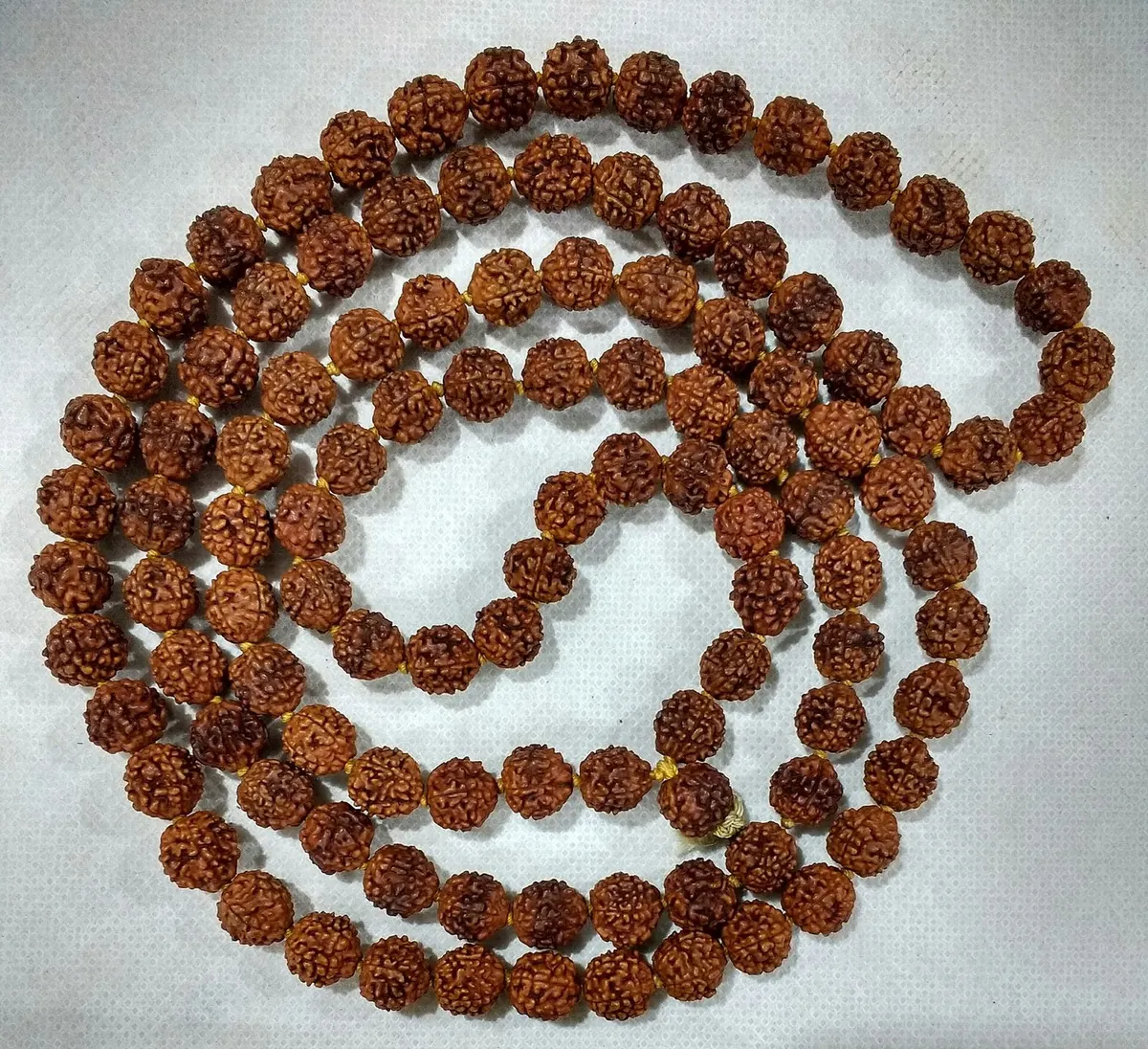
If you have ever held a japa mala, you know it has 108 beads. If you have read any scripture on mantra sadhana, you have likely encountered the number 1008. But why these specific numbers? And which count should you aim for in your daily practice?
The Significance of 108
The number 108 appears repeatedly across Hindu, Buddhist, and Jain traditions. It is considered sacred for several interconnected reasons:
Astronomical Connection
- There are 27 nakshatras (lunar mansions) and 4 padas (quarters) in each, giving 27 × 4 = 108 divisions of the zodiac.
- The average distance between the Sun and Earth is approximately 108 times the Sun’s diameter.
- The average distance between the Moon and Earth is approximately 108 times the Moon’s diameter.
Mathematical Properties
- 108 = 1¹ × 2² × 3³ — the first three natural numbers raised to their own power.
- In Vedic mathematics, 108 is a Harshad number (divisible by the sum of its digits: 1 + 0 + 8 = 9).
Spiritual Significance
- The Sri Yantra contains 54 intersections, each with a masculine and feminine quality — 54 × 2 = 108.
- There are 108 Upanishads in the Muktika canon.
- The 108 names (ashtottara shatanamavali) are recited for each major deity.
- There are traditionally 108 pithas (sacred sites) of the Goddess.
The Meru Bead
The 109th bead — the Meru or Sumeru — is not counted. It serves as the starting and ending point, representing the guru or the divine itself. When you complete one round of 108, you have completed one “mala.”
The Significance of 1008
The number 1008 represents a deeper level of commitment:
- 1008 = 108 × 9.33… — but more accurately, it represents the sahasranama (thousand-name) tradition rounded to the sacred 108 framework.
- Each major deity has a Sahasranama (1000 names), and 1008 is the devotional count that honors this tradition.
- In temple traditions, 1008 repetitions of a mantra is the standard for an archana (formal offering of names).
- The Sahasranama Archana — reciting 1000+ names of a deity — is one of the most meritorious acts of worship.
Choosing Your Count
Daily Practice: 108
For most practitioners, 1 to 3 rounds of 108 is the right daily target.
Who it’s for:
- Beginners establishing a daily practice
- Working professionals with limited morning time
- Anyone maintaining consistency as a priority
Time required: Approximately 10–15 minutes per round, depending on mantra length and pace.
Intensive Practice: 1008
1008 repetitions (roughly 9–10 mala rounds) suits deeper sadhana sessions.
Who it’s for:
- Practitioners who have established a stable 108 practice
- Special occasions: festivals, eclipses, Pradosh Vrat, personal sankalpa
- Those undertaking a purashcharana (formal mantra initiation cycle)
Time required: Approximately 90 minutes to 2 hours.
Extended Practice: 1 Lakh (100,000)
A purashcharana typically requires 1,00,000 repetitions of the mantra — usually spread over 40 days to several months.
Who it’s for:
- Serious sadhakas under a guru’s guidance
- Those seeking to “activate” a mantra’s full shakti
- Major life transitions or spiritual commitments
The Quality Principle
The Narada Bhakti Sutra reminds us: quality of devotion matters more than quantity of repetition.
Key principles regardless of your count:
- Attention over speed — A distracted lakh is worth less than an attentive 108.
- Regularity over intensity — Daily 108 for a year beats a single marathon session.
- Pronunciation matters — Each syllable carries shakti. Rushing corrupts the sound.
- Mental state — Begin with a calm mind. Even 2 minutes of pranayama before jaap makes a difference.
Practical Recommendations
If you are just starting:
- Begin with 54 repetitions (half a mala) for 1 week
- Move to 108 in week 2
- Maintain 108 daily for at least 40 days before increasing
If you have an established practice:
- Morning: 108 repetitions
- Evening: 108 repetitions
- Special days (Ekadashi, festivals): 1008 repetitions
If you are doing sadhana:
- Follow your guru’s instruction on count
- Track your cumulative count toward your purashcharana target
- Use our Naam Jaap Counter to track multi-day progress
Beyond the Numbers
The ancient rishis gave us these numbers as frameworks, not prisons. Adi Shankaracharya said that even a single utterance of the divine name with full awareness is enough to liberate the soul.
The mala count is a container for your devotion — the devotion itself is what matters.
Start where you are. Count what you can. And let the mantra carry you forward.
Om Tat Sat.
Start your digital sadhana today.
Track your mantra practice with our free Naam Jaap Counter.
Open Naam Jaap Counter →