Mahamrityunjaya Mantra — Meaning, Benefits & Complete Practice Guide
Learn the complete meaning of the Mahamrityunjaya Mantra, its healing benefits, correct chanting method, and how this powerful Shiva mantra protects against fear and negativity.
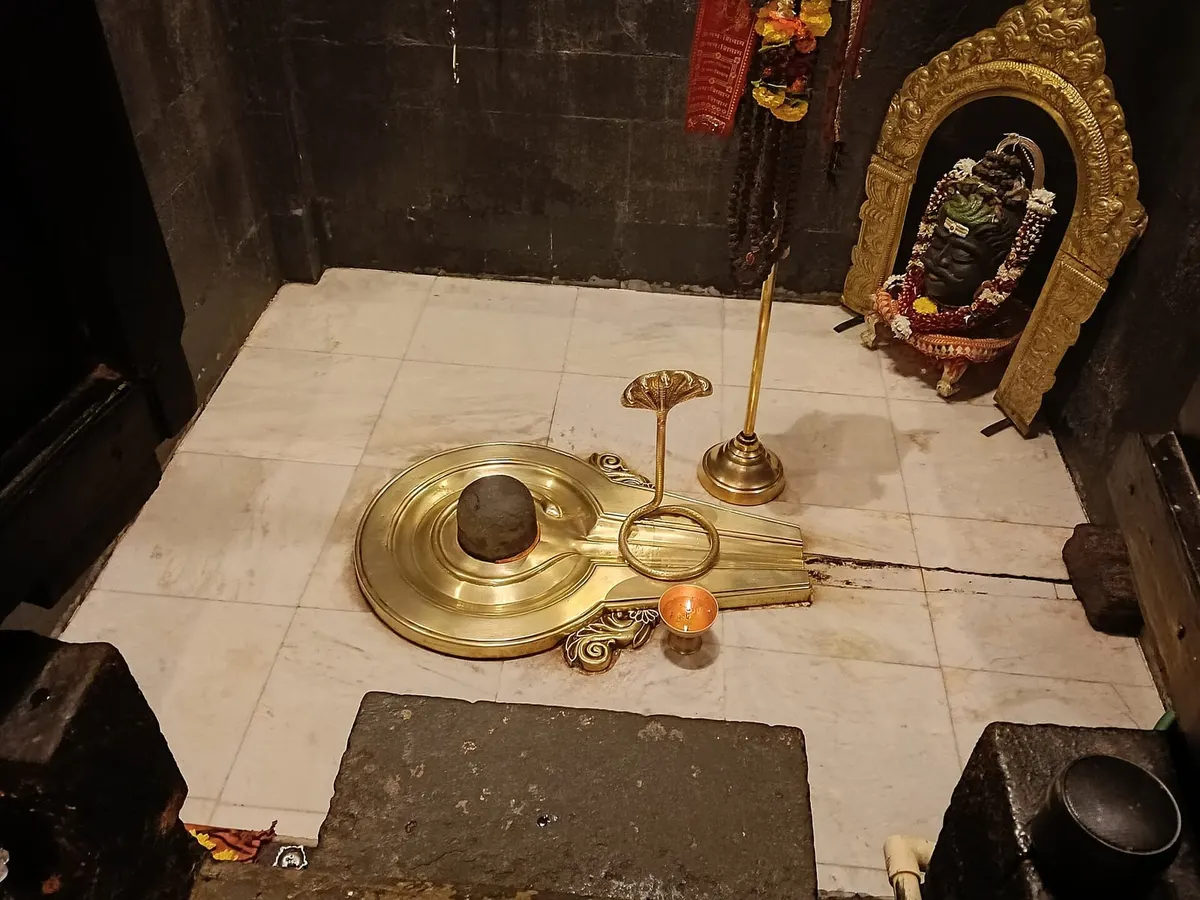
The Mahamrityunjaya Mantra is one of the oldest and most powerful mantras in the Vedic tradition. Known as the “Great Death-Conquering Mantra,” it is addressed to Lord Shiva in His form as Tryambaka — the three-eyed one — and has been chanted for millennia to overcome illness, fear, and untimely death.
Om Tryambakam Yajamahe Sugandhim Pushtivardhanam Urvarukamiva Bandhanan Mrityor Mukshiya Maamritat
This mantra appears in the Rig Veda (7.59.12), the oldest scripture known to humanity, and again in the Yajur Veda (3.60). It is also called the Rudra Mantra (addressed to the fierce aspect of Shiva), the Tryambakam Mantra (invoking the three-eyed Lord), and the Mrita Sanjivini Mantra — the mantra that restores life itself.
Origin and the Story of Rishi Markandeya
The Mahamrityunjaya Mantra is attributed to Rishi Markandeya, and the story behind it is among the most moving narratives in Hindu tradition.
Markandeya was born to Sage Mrikandu and his wife Marudmati after intense tapasya. Lord Shiva gave them a choice: a son of great virtue who would live only 16 years, or a long-lived son of ordinary nature. They chose virtue. Markandeya grew into an extraordinary devotee, and as his sixteenth birthday approached, he was fully aware of his fate.
When Yama, the Lord of Death, arrived to claim him, Markandeya embraced the Shiva Linga and chanted with absolute surrender. Yama’s noose fell around both the boy and the Linga. Shiva, enraged that Yama dared touch His devotee, emerged from the Linga and struck Yama down with His trishul. He then declared Markandeya chiranjivi — immortal forever.
The mantra Markandeya chanted in that moment of supreme devotion is the Mahamrityunjaya Mantra. This is why it carries the shakti to conquer death and protect the sincere practitioner from fear and suffering.
Word-by-Word Meaning
Understanding each word deepens the mantra’s effect during japa. The mantra is not a vague prayer — every syllable carries precise meaning:
| Sanskrit | Meaning |
|---|---|
| Om | The primordial sound, essence of all creation |
| Tryambakam | The three-eyed one (Lord Shiva) — tri (three) + ambakam (eyes) |
| Yajamahe | We worship, we honour, we meditate upon |
| Sugandhim | The fragrant one; He whose presence pervades like divine fragrance |
| Pushtivardhanam | The nourisher, the one who increases fullness and vitality |
| Urvarukam | Cucumber (a ripe fruit) |
| Iva | Like, as |
| Bandhanan | From bondage, from the stem |
| Mrityor | From death |
| Mukshiya | May we be liberated |
| Maamritat | Grant us immortality (amrita — the nectar of deathlessness) |
The Complete Translation
“We worship the three-eyed Lord Shiva, who is fragrant and who nourishes all beings. As a ripe cucumber is naturally released from its vine, may He liberate us from death and grant us the nectar of immortality.”
The imagery of the cucumber is deeply intentional. A ripe cucumber separates effortlessly from its stem — no force, no pain. The devotee prays not to avoid death entirely, but to be freed from the fear of death, from attachment, from suffering. Liberation should come as naturally as a fruit ripening.
Connection to Lord Shiva as Tryambaka
The name Tryambaka has multiple layers of meaning. The most direct: Shiva possesses three eyes — the sun, the moon, and the fire of wisdom (Agni). The third eye represents the destruction of ignorance and the awakening of transcendent knowledge.
But Tryambaka also means “the one who has three mothers” — a reference to the three shaktis (Iccha, Jnana, Kriya) or the three gunas (Sattva, Rajas, Tamas) that Shiva transcends. By addressing Him as Tryambaka, the mantra invokes Shiva’s power over all dimensions of existence — physical, subtle, and causal.
Shiva in this form is not the ascetic meditator of Kailash alone. He is Mahamrityunjaya — the conqueror of death — the supreme healer who stands between His devotee and destruction.
Healing and Protection Benefits
Physical Healing
The Mahamrityunjaya Mantra has been chanted at bedsides for centuries. In Ayurvedic tradition, it is prescribed alongside medical treatment for serious illness. The mantra is believed to activate the body’s innate healing energy and strengthen the prana (life force) of the sick person.
It is common practice in Hindu families to organize a Mahamrityunjaya Jaap of 1.25 lakh (125,000) repetitions when a family member faces critical illness or surgery. Multiple family members and priests chant together to complete this count, often alongside a havan (fire ceremony).
Protection from Untimely Death
The mantra’s primary purpose in the Vedic context is Apamrityu Nashak — destruction of untimely death. This does not promise physical immortality. It means protection from accidents, sudden calamities, and death that comes before one’s natural time. Many practitioners chant it before long journeys or during dangerous situations.
Removal of Fear and Negativity
Regular chanting dissolves deep-seated fears — fear of death, fear of loss, fear of the unknown. The mantra creates a protective shield of positive vibration around the practitioner. Those who maintain consistent practice often report a marked reduction in anxiety, nightmares, and irrational fears.
Karmic Purification
The Shiva Purana describes this mantra as a purifier of past karmas. Sincere repetition gradually loosens the grip of negative samskaras that manifest as recurring suffering, obstacles, and patterns of misfortune.
When to Chant the Mahamrityunjaya Mantra
While the mantra can be chanted at any time, certain occasions amplify its power:
- During illness — Chant for yourself or on behalf of someone who is unwell. Even listening to the mantra is considered beneficial for the sick.
- Maha Shivaratri — The most auspicious night for all Shiva mantras. Chanting Mahamrityunjaya through the night of Shivaratri is considered equivalent to months of regular practice.
- Shravan (Sawan) month — The entire month is sacred to Shiva. Daily japa during Shravan carries multiplied phala (spiritual merit).
- Pradosh Kaal — The twilight period, roughly 1.5 hours before and after sunset, is especially potent for Shiva worship.
- During fear or danger — When facing accidents, natural disasters, surgery, or any life-threatening situation.
- On birthdays — Chanting 108 times on your birthday is a traditional practice for longevity and good health in the coming year.
- Monday (Somvar) — Shiva’s day. Combine your japa with a Somvar vrat for deeper effect.
Correct Pronunciation and Chanting Method
Pronunciation Guide
Proper pronunciation matters. The key points:
- Tryam-ba-kam — not “Tri-yam-ba-kam.” The “Try” is a single beat.
- Ya-ja-ma-he — stress on “ma,” not on “ya.”
- Su-gan-dhim — the “dh” is an aspirated sound, not a simple “d.”
- Push-ti-var-dha-nam — again, “dh” is aspirated.
- Ur-va-ru-kam — “ru” as in “rule.”
- Mri-tyor — “Mri” is one syllable, like starting to say “mri” in “amrit.”
- Muk-shi-ya — not “Mook-shi-ya.” Short “u.”
- Ma-amri-tat — two syllables “Ma-amri-tat,” final “t” is soft.
If you are new to Sanskrit pronunciation, listen to a learned pandit or a reliable audio recording several times before beginning your own practice. Incorrect pronunciation does not bring harm — Shiva accepts sincere devotion in any accent — but correct pronunciation deepens the vibratory effect.
How to Practice
- Sit facing East or North on a clean asana (mat or cloth).
- Light a diya (lamp) if possible. A ghee lamp before a Shiva image or Linga is ideal.
- Hold a Rudraksha mala (108 beads). Rudraksha is sacred to Shiva and amplifies the mantra’s energy. If unavailable, use a Tulsi or Sphatik mala.
- Begin with three Om chants to settle the mind.
- Chant 108 times (one full mala). Use the middle finger and thumb to count beads; the index finger should not touch the mala.
- Maintain steady rhythm — neither too fast nor too slow. Each repetition should take about 8-10 seconds.
- Do not cross the Sumeru bead (the guru bead at the mala’s head). If doing multiple rounds, flip the mala and continue in reverse.
One round of 108 takes approximately 15-18 minutes. For serious sadhana, practitioners chant 5 or 11 malas daily. For general well-being, a single mala of 108 is sufficient.
You can track your daily count using the Naam Jaap Counter to maintain consistency and monitor your practice over time.
Scientific and Psychological Perspective
Modern research into mantra meditation supports what practitioners have known for millennia:
- Vagus nerve activation — The deep, rhythmic breathing and throat vibration during chanting stimulate the vagus nerve, triggering the parasympathetic (rest-and-heal) response. This lowers heart rate, reduces blood pressure, and calms the nervous system.
- Reduced cortisol levels — Studies on mantra-based meditation have shown measurable decreases in cortisol, the primary stress hormone, after consistent practice of 4-8 weeks.
- Neuroplasticity — Repetitive mantra chanting strengthens neural pathways associated with focus, emotional regulation, and calm. MRI studies on long-term meditators show increased grey matter density in the prefrontal cortex and hippocampus.
- Psychological resilience — Confronting the concept of death through the mantra’s meaning — rather than avoiding it — builds what psychologists call “death acceptance,” which paradoxically reduces anxiety and increases present-moment engagement with life.
- Sound frequency effects — The specific combination of syllables in Vedic mantras generates resonant frequencies in the oral and nasal cavities that correspond to calming brainwave patterns. The Mahamrityunjaya Mantra’s structure emphasizes nasal resonance (the “m” and “n” sounds), which promotes alpha-wave activity associated with relaxed alertness.
Common Uses in Daily Life
- For health — Chant daily during recovery from illness. Many families chant it collectively for an ailing elder.
- Before travel — A single round of 108 before a journey, especially a long one, is a traditional safeguard.
- Removing obstacles — When facing repeated setbacks in work or personal life, a 40-day (Mandala) practice of daily 108 chants can shift the energy.
- For someone who has passed — The mantra is chanted to bring peace to the departed soul and comfort to the grieving family.
- During pregnancy — Expectant mothers chant it for the protection and health of the unborn child.
- Overcoming addiction or negative habits — The mantra’s theme of liberation from bondage applies not only to death but to any form of attachment that binds us.
Track your 40-day Mandala commitment with the Naam Jaap Counter — maintaining an unbroken streak strengthens both discipline and devotion.
Begin Your Practice Today
The Mahamrityunjaya Mantra asks nothing of you except sincerity. You do not need a temple. You do not need a priest. You need only a quiet space, a few minutes, and an open heart.
Start with one mala of 108 repetitions each morning. Let the meaning sink in as you chant — you are calling upon the infinite compassion of Mahadeva, the same compassion that saved Markandeya, the same power that conquered Yama himself.
Fear dissolves in the presence of this mantra. Illness loosens its grip. The mind, turbulent and restless, finds an anchor. This is not belief — this is the lived experience of countless practitioners across thousands of years.
Chant with faith. Chant with understanding. Let Tryambaka, the three-eyed Lord, nourish and liberate you — as naturally and gently as a ripe fruit falling from its vine.
Om Tryambakam Yajamahe Sugandhim Pushtivardhanam Urvarukamiva Bandhanan Mrityor Mukshiya Maamritat
Har Har Mahadev.
Start your digital sadhana today.
Track your mantra practice with our free Naam Jaap Counter.
Open Naam Jaap Counter →