Ram Naam Jaap — Benefits, Method & the Power of Chanting Ram
Explore the spiritual power of Ram Naam Jaap. Learn the correct method, benefits of chanting Sri Ram's name, scriptural references, and how to build a daily Ram Naam practice.
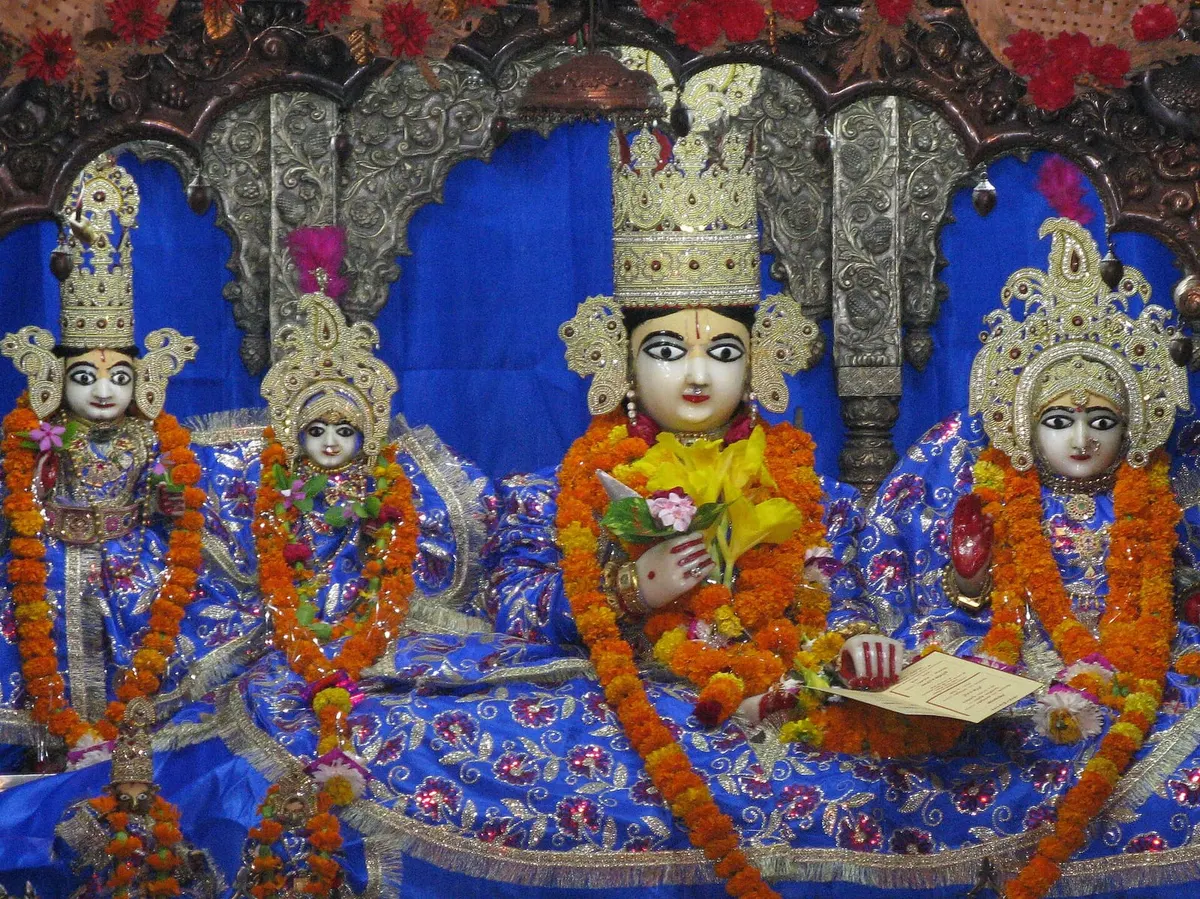
Of all the names of God that the Hindu tradition has preserved, Ram holds a singular place. Goswami Tulsidas wrote that the name “Ram” is greater than both the Nirgun (formless) and Sagun (formed) aspects of the divine — because the Name is the bridge between the two. In the Kali Yuga, where elaborate rituals and decades of tapasya are beyond most people’s reach, Ram Naam Jaap stands as the simplest and most direct path to inner purification and liberation.
This is not metaphor. The entire Sant tradition — Tulsidas, Kabir, Ramdas, Meera — built their sadhana on this single foundation: the repetition of Ram’s name.
The Significance of Ram Naam in Hindu Tradition
Tulsidas and the Ramcharitmanas
Tulsidas devoted the opening of the Ramcharitmanas to the glory of Ram Naam. In the Balkand, he writes:
“Ram Naam Mani Deep Dharu, Jeeh Dehari Dwaar. Tulsi Bheetar Baahiro, Jo Chahai Ujiyaar.” “Place the jewel-lamp of Ram’s Name on the threshold of the tongue. Tulsidas says, it will illuminate both the inner world and the outer.”
For Tulsidas, the Name was not secondary to Ram’s leela — it was the essence. He repeatedly states that the Name is more accessible than the Lord Himself, because Ram appeared in one yuga, but His Name is available in every yuga.
Kabir and the Sant Tradition
Kabir, who belonged to no single sect, placed Ram Naam at the center of his path. His Ram was neither the Ayodhya prince alone nor an abstract Brahman alone — it was the living reality accessed through repetition of the Name.
“Dasrath Sut Tihu Lok Bakhaana, Ram Naam Ka Maramu Hai Aana.” “The world knows Ram as Dashrath’s son, but the secret of Ram Naam is something else entirely.”
Sant Namdev, Ramdas Swami, and Meera Bai all echoed this teaching: the Name carries the full power of the deity. You do not need to visualize a form or understand theology. Chant, and the Name does its work.
The Taraka Mantra
In Varanasi, tradition holds that Lord Shiva Himself whispers the Taraka Mantra — “Sri Ram” — into the ear of every soul that dies at Kashi, granting instant moksha. This is why Ram Naam is called the Taraka Mantra: the name that ferries you across the ocean of samsara.
The Padma Purana declares: “Sri Rama Rama Rameti, Rame Raame Manorame. Sahasranama Tattulyam, Rama Nama Varanane.” — Chanting Ram’s name three times is equal to reciting the entire Vishnu Sahasranama (1000 names of Vishnu).
Ram Naam Mantras — Which One to Chant
There is no single “correct” Ram mantra. Different forms serve different intentions and temperaments:
Sri Ram Jay Ram Jay Jay Ram
This is the mantra popularized by Samarth Ramdas Swami, the guru of Chhatrapati Shivaji. It carries a devotional and victorious energy. Ramdas prescribed 13 crore (130 million) repetitions as a lifetime sadhana — and built the entire Samarth Sampradaya around this practice.
Om Sri Ramaya Namah
A more formal Vedic-style mantra. The “Om” prefix connects it to the universal Pranava, and “Namah” adds the element of surrender. Suitable for those who prefer a structured, meditative approach.
Ram Ram / Sri Ram
The simplest form. Two syllables. Kabir, Tulsidas, and Gandhi all favored the bare repetition of “Ram” or “Sri Ram.” Its simplicity is its power — there is nothing for the mind to analyze, only the Name to absorb.
Hare Rama Hare Rama, Rama Rama Hare Hare
The second half of the Maha Mantra. Gaudiya Vaishnavas and ISKCON practitioners chant this as part of the full 16-word Hare Krishna Maha Mantra. It combines the energy of both Ram and Krishna.
If you are unsure which form to pick, start with Sri Ram Jay Ram Jay Jay Ram or simply Ram Ram. Let the practice itself guide you toward the form that resonates.
Benefits of Ram Naam Jaap
Spiritual Purification
Every repetition of Ram Naam is said to burn accumulated papa (sin) and negative samskaras. The Ramcharitmanas compares the Name to fire and sins to dry grass — contact is all that is needed. This is not a slow process if done with faith; Valmiki was a highway robber who attained rishi-hood through Ram Naam alone.
Mental Peace and Emotional Stability
The rhythmic repetition of a two-syllable name — Ra-ma, Ra-ma — naturally slows the breath and calms the nervous system. Anxiety, anger, and restlessness gradually lose their grip. This is not just devotional teaching; modern research on mantra meditation confirms measurable reductions in cortisol, heart rate, and amygdala activation during repetitive sacred chanting.
Focus and Clarity
Jaap is concentration training. Each time the mind wanders and you bring it back to “Ram,” you strengthen the prefrontal cortex. Over weeks and months, this sharpens focus in every area of life — work, study, relationships.
Liberation (Moksha)
The ultimate promise of Ram Naam is moksha. Tulsidas writes that the Name is the only reliable boat in the Kali Yuga. Other sadhanas require specific conditions — a qualified guru, proper initiation, years of study. Ram Naam requires only sincere repetition.
Special Importance in Kali Yuga
The Bhagavata Purana and several other texts emphasize that in Kali Yuga, Nama Sankirtana (chanting the divine name) is the prescribed sadhana:
“Kali Yuga Kewal Naam Adhara, Sumir Sumir Nar Utarahin Paara.” “In Kali Yuga, the Name alone is the support. By remembering it, one crosses over.”
No other practice — yajna, tapasya, pilgrimage — is said to match the efficacy of Naam Jaap in this age.
The Correct Method for Ram Naam Jaap
For a detailed guide on the foundational technique of Naam Jaap, read our complete walkthrough: How to Do Naam Jaap Correctly. Below are the specifics for Ram Naam practice.
Posture and Setting
Sit on a clean aasan (mat or woolen cloth) in Sukhasana or Padmasana. Spine straight, shoulders relaxed, eyes gently closed. Face east or north. A dedicated puja space is ideal, but any clean, quiet spot works.
Sankalp (Intention)
Before beginning, take a moment of sankalp. This can be simple: “I offer this jaap to Sri Ram for the purification of my mind and the welfare of all beings.” Sankalp anchors the practice and prevents it from becoming mechanical.
Mala or Digital Counter
Use a Tulsi mala (108 beads) — Tulsi is sacred to Vishnu and His avatars, making it the traditional choice for Ram Naam. Hold the mala in your right hand, draped over the middle finger, advancing beads with the thumb. Do not cross the Sumeru bead; reverse direction at each completion.
If you prefer tracking digitally, the Naam Jaap Counter lets you count precisely, set daily targets, and maintain streaks across days and weeks — without worrying about bead mechanics.
Pace and Pronunciation
Find a steady, medium pace. “Sri Ram Jay Ram Jay Jay Ram” should flow naturally — not rushed into a blur, not dragged so slowly that the mind fills the gaps with distraction. Pronounce each syllable clearly. Let the rhythm become like breathing: effortless and continuous.
Begin with Vachika Jaap (chanting aloud) if you are new. Progress to Upanshu Jaap (whispering) and eventually to Manasik Jaap (purely mental). Mental jaap is the most powerful form but requires months of practice to sustain without losing focus.
Focus Point
Rest your attention on the sound of the Name. Some practitioners visualize Sri Ram’s murti at the heart center or between the eyebrows. Others focus purely on the vibration of the syllables. Both approaches are valid. The key: when the mind wanders, gently return to the Name without frustration.
How Many Times? 108, 1008, or Lakhs?
The traditional minimum is one mala — 108 repetitions. This is a complete unit of practice and takes roughly 10-15 minutes depending on the mantra and pace.
For deeper sadhana:
- 1008 repetitions (roughly 10 malas) — a powerful daily commitment
- One lakh (100,000) — a common sankalp for a specific prayer or vrata
- 13 crore — the lifetime sadhana prescribed by Ramdas Swami
For a deeper look at the spiritual mathematics of mala counting, see: 108 vs 1008 — Understanding Mala Count.
Start where you can sustain consistency. One mala daily without a single day missed is worth more than five malas done sporadically. Use the Naam Jaap Counter to track your running total — watching the count grow into thousands and lakhs builds momentum and devotion.
Best Times to Chant Ram Naam
- Brahma Muhurta (4:00-5:30 AM) — The most sattvic time. The mind is fresh, the world is quiet, and the veil between the individual and the divine is said to be thinnest.
- Sunrise and Sunset (Sandhya Kaal) — The transition hours carry special spiritual potency.
- Before sleep — One mala of Ram Naam before bed purifies the subconscious and promotes deep, dreamless sleep.
- Ram Navami — The birthday of Sri Ram. Continuous Ram Naam on this day is considered extraordinarily meritorious.
- Any time of distress — Ram Naam is not bound by ritual rules. In moments of fear, grief, or confusion, simply begin chanting. The Name works regardless of purity conditions.
In truth, there is no wrong time for Ram Naam. The above are optimal windows, but the best time is whenever you will actually do it.
Ram Naam in Daily Life — Likhit Japa
Beyond vocal and mental repetition, the tradition offers Likhit Japa — the practice of writing Ram’s name. Take a dedicated notebook and write “Sri Ram” or “Ram Ram” line after line, page after page. This engages the hand, the eye, and the mind simultaneously — a triple lock on concentration.
Many devotees maintain a Likhit Japa practice alongside their mala-based jaap. Some aim to fill entire notebooks — a physical, tangible record of devotion. Mahatma Gandhi practiced Likhit Japa throughout his life and considered Ram Naam the breath of his spiritual existence.
Building a Daily Ram Naam Practice
- Fix a minimum — one mala (108) is a strong starting point.
- Fix a time — same time daily. Morning is best; consistency matters more than the hour.
- Fix a place — same seat, same direction. The spot accumulates spiritual energy over time.
- Track your count — use a physical log or the Naam Jaap Counter to see cumulative progress.
- Never zero — if you miss your full session, do at least 11 or 21 repetitions. Keep the chain unbroken.
- Increase gradually — after a month at one mala, add a second. After three months, a third. Let the practice grow organically.
Ram Naam Jaap is not a technique you master and move beyond. It is a lifelong relationship with the Name — one that deepens with every repetition, every year, every stage of life. The saints who chanted crores of Ram Naam did not do so because they had to. They did so because once the Name takes root in the heart, nothing else compares.
“Ek Ram Dashrath Ka Beta, Ek Ram Ghat Ghat Mein Baitha. Ek Ram Ka Sakal Pasara, Ek Ram Sab Se Nyara.” “One Ram is Dashrath’s son. One Ram dwells in every heart. One Ram is the entire creation. One Ram is beyond all.” — Sant Kabir
Begin today. One mala. One Name. That is enough.
Start your digital sadhana today.
Track your mantra practice with our free Naam Jaap Counter.
Open Naam Jaap Counter →