Lakshmi — Shukravar Puja Steps & Ashtalakshmi Names
Complete Friday puja guide for Goddess Lakshmi including step-by-step worship, the eight forms of Ashtalakshmi, and prosperity mantras.
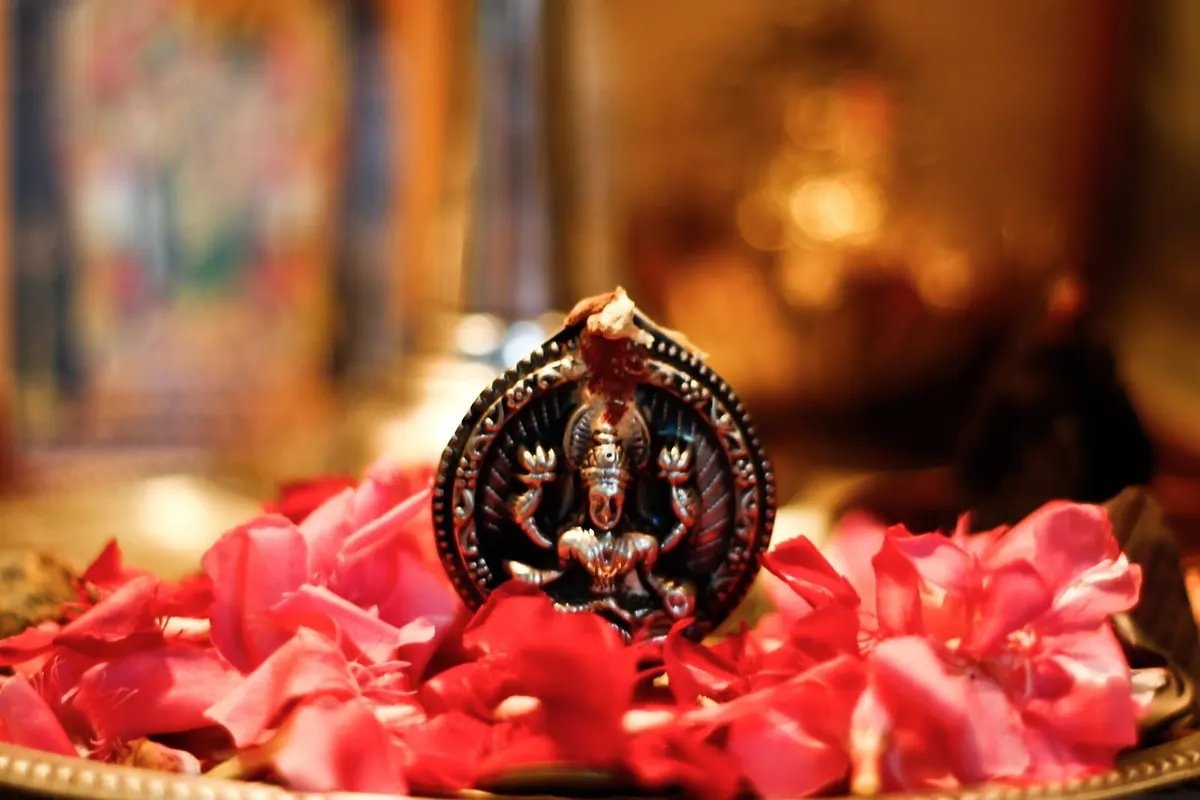
Goddess Lakshmi — the divine consort of Lord Vishnu — embodies wealth, fortune, beauty, and prosperity in all its forms. She is not merely the goddess of material wealth; she represents the abundance of health, knowledge, courage, and spiritual fulfillment.
The Eight Forms: Ashtalakshmi
Lakshmi manifests in eight forms, each governing a different aspect of prosperity:
| Form | Domain | Mantra |
|---|---|---|
| Adi Lakshmi | Primordial wealth, spiritual liberation | Om Shreem Adi Lakshmiyei Namah |
| Dhana Lakshmi | Material wealth and financial abundance | Om Shreem Dhana Lakshmiyei Namah |
| Dhanya Lakshmi | Agricultural wealth, food abundance | Om Shreem Dhanya Lakshmiyei Namah |
| Gaja Lakshmi | Royal power, animal wealth | Om Shreem Gaja Lakshmiyei Namah |
| Santana Lakshmi | Progeny, family blessings | Om Shreem Santana Lakshmiyei Namah |
| Veera Lakshmi | Courage and strength | Om Shreem Veera Lakshmiyei Namah |
| Vijaya Lakshmi | Victory in all endeavors | Om Shreem Vijaya Lakshmiyei Namah |
| Vidya Lakshmi | Knowledge and wisdom | Om Shreem Vidya Lakshmiyei Namah |
When you worship Lakshmi, you invite all eight forms of abundance into your life — not just money.
Friday Puja (Shukravar Vrat)
Friday is Lakshmi’s sacred day. Regular Friday worship is one of the most effective ways to invite prosperity.
Preparation
- Clean your home thoroughly (Lakshmi does not enter unclean spaces)
- Wear clean, preferably white or yellow clothes
- The puja area should have a red or pink cloth
Step-by-Step Puja Vidhi
1. Set Up
- Place Lakshmi murti or image on a clean platform
- Place a Kalash (water pot) with coconut and mango leaves
- Keep a lotus flower (fresh or artificial) near the murti
- Place a silver coin and some rice grains before the murti
2. Invocation (Avahana) Light a ghee diya and incense. Invite Lakshmi: “Om Shreem Mahalakshmiyei Namah. Shri Lakshmiyai Avahayami.”
3. Offerings (Upachara) Offer each item while chanting “Om Shreem Mahalakshmiyei Namah”:
- Sandalwood paste (chandan)
- Turmeric and kumkum
- Fresh flowers — lotus, marigold, jasmine
- Fruits — especially banana and pomegranate
- Sweets — kheer, laddoo
- Betel leaves and supari
4. Main Mantra Chanting Chant the Lakshmi mantra 108 times with a mala: “Om Shreem Mahalakshmiyei Namah”
5. Sri Sukta Recitation (optional but powerful) The Sri Sukta from the Rig Veda is the oldest and most authoritative hymn to Lakshmi. Even reciting the first few verses brings blessings.
6. Aarti Perform the Lakshmi aarti: “Om Jai Lakshmi Mata, Maiya Jai Lakshmi Mata”
7. Pradakshina and Prarthana Circumambulate the puja space (or turn in place) three times, then offer your personal prayer.
Friday Fasting Rules
- Eat one meal — preferably after the evening puja
- Avoid non-vegetarian food, garlic, and onion
- Fruits, milk, and sweets are permitted throughout the day
- Wear white clothes if possible
- Continue for 16 consecutive Fridays for the traditional Lakshmi Vrat
Lakshmi Mantras for Daily Practice
The Maha Mantra
“Om Shreem Mahalakshmiyei Namah”
- Most widely used. Suitable for daily chanting.
- 108 repetitions, morning or evening.
Lakshmi Beej Mantra
“Om Shreem”
- Compact, powerful. Good for meditation.
- Activates abundance energy in the heart chakra.
Lakshmi Gayatri Mantra
“Om Mahalakshmyai Cha Vidmahe, Vishnu Patnyai Cha Dhimahi, Tanno Lakshmi Prachodayat”
- For deeper spiritual practice and wisdom.
Kanakadhara Stotra
Composed by Adi Shankaracharya, this hymn is specifically for material prosperity. Reciting it on Fridays is considered extremely auspicious.
Signs of Lakshmi’s Presence
According to tradition, Lakshmi is present where:
- The home is clean, well-lit, and fragrant
- Family members treat each other with respect
- There is no wastage of food or resources
- Tulsi plant is healthy and well-maintained
- The entrance is clean and decorated (rangoli)
- There is generosity — Lakshmi flows through giving, not hoarding
Lakshmi and Diwali
Diwali night is the most important Lakshmi worship of the year. On Amavasya night:
- The entire house is lit with diyas
- The main door is kept open
- Lakshmi-Ganesh puja is performed during Pradosh Kaal
- New account books are placed before Lakshmi for blessing
Read our complete guide: Diwali Puja Vidhi — Step by Step
Practical Wisdom from Lakshmi Worship
Lakshmi teaches that wealth is not static — it flows. Key principles:
- Cleanliness attracts prosperity — Keep your workspace and home orderly
- Generosity creates circulation — Donate regularly; stagnant wealth leaves
- Respect for resources — Never waste food, water, or money
- Gratitude — Acknowledge what you have before asking for more
- Ethical earning — Lakshmi leaves homes where wealth is earned through adharma
What Lakshmi Worship Does Not Promise
Lakshmi is the goddess of prosperity, and it is easy to slide from “prosperity” into “guaranteed money”. The tradition is more careful than that. Lakshmi is chanchala — fickle by nature — precisely because wealth moves. The Puranas describe her leaving households that become arrogant, wasteful or unethical, and staying where there is cleanliness, generosity and right conduct.
Nothing in the Friday vrat or the Sri Sukta is a financial instrument. The practice is a discipline of gratitude, order and giving; the prosperity it describes includes health, learning, courage and family wellbeing, not only money. Treat any page that promises a fixed financial return from a mantra as marketing, not tradition.
Common Questions About Friday Puja
Can I do the puja if I work on Fridays? Yes. The traditional time is dusk, after work. What matters is a clean space, a lamp, and a settled mind. A short puja — lamp, flowers, 108 repetitions, aarti — is complete in itself.
Is a silver coin necessary? No. A coin is a symbol of the household’s prosperity placed before the murti. Rice grains, a kalash, or a simple diya are enough if you do not have one.
Which mantra should a beginner use? Om Shreem Mahalakshmiyei Namah, 108 repetitions. The beej mantra Om Shreem is shorter but traditionally taken up with more care; the full form is the safer starting point.
Does the 16-Friday vrat have to be unbroken? Tradition treats it as a continuous vow, so most families complete all sixteen without a break. If a Friday is missed through illness or travel, the common practice is to continue the sequence rather than restart it, though local custom varies.
Can men observe the Friday vrat? Yes. Lakshmi worship is not restricted by gender. The household observance is usually led by women, but the vrat and the mantra are open to anyone.
Sources
- Sri Sukta, Rig Veda (Khila portion) — the principal Vedic hymn to Lakshmi.
- Lakshmi Tantra — the theological treatment of Lakshmi and her forms.
- Vishnu Purana — the account of Lakshmi’s emergence during the churning of the ocean.
- Kanakadhara Stotra, Adi Shankaracharya — the hymn referenced above.
Track Your Lakshmi Mantra Practice
Use our Naam Jaap Counter to maintain your daily “Om Shreem Mahalakshmiyei Namah” count, especially during your Friday vrat.
Om Shreem Mahalakshmiyei Namah.
Start your digital sadhana today.
Track your mantra practice with our free Naam Jaap Counter.
Open Naam Jaap Counter →