Durga — Navratri Guide & Nine Forms Explained
A complete guide to Navratri celebration including the nine forms of Goddess Durga, daily worship practices, and the significance of each night.
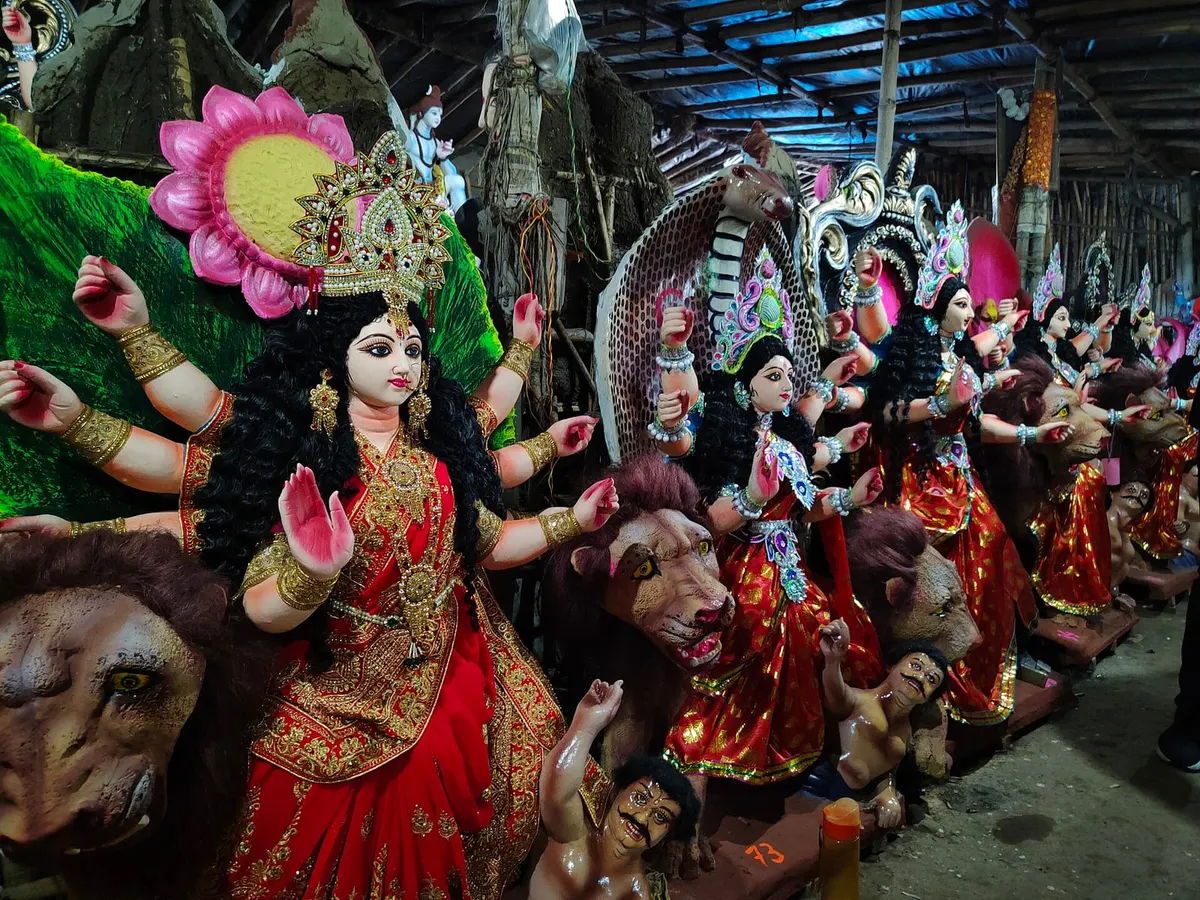
Goddess Durga — the invincible warrior, the supreme Shakti, the mother of the universe — represents the fierce, protective aspect of the Divine Feminine. Her nine-night festival, Navratri, is one of the most important celebrations in Hinduism, observed four times a year with the Sharad Navratri (September/October) being the most widely celebrated.
The Nine Forms of Durga (Navadurga)
Each night of Navratri is dedicated to one of Durga’s nine forms. Worshipping them in sequence represents the soul’s journey from darkness to enlightenment.
Day 1: Shailaputri (Daughter of the Mountain)
- Meaning: Born of the Himalayas
- Color: Orange/Red
- Mantra: “Om Devi Shailaputryai Namah”
- Significance: Represents the root chakra (Muladhara). She is the embodiment of nature’s power and the first step in spiritual awakening.
Day 2: Brahmacharini (The Ascetic)
- Meaning: One who practices devout austerity
- Color: White
- Mantra: “Om Devi Brahmacharinyai Namah”
- Significance: Represents the Svadhisthana chakra. She embodies tapas (penance) and determination — walking barefoot, carrying a japa mala and kamandalu.
Day 3: Chandraghanta (The Bell-Shaped Moon)
- Meaning: One who bears the moon as a bell on her head
- Color: Yellow
- Mantra: “Om Devi Chandraghantayai Namah”
- Significance: Represents the Manipura chakra. She is the warrior form — ten-armed, riding a tiger, ready for battle. Her bell-sound drives away evil.
Day 4: Kushmanda (Creator of the Cosmic Egg)
- Meaning: One who created the universe with her smile
- Color: Green
- Mantra: “Om Devi Kushmandayai Namah”
- Significance: Represents the Anahata (heart) chakra. She resides within the sun, giving it the energy to illuminate the cosmos.
Day 5: Skandamata (Mother of Skanda/Kartikeya)
- Meaning: Mother of the warrior god Kartikeya
- Color: Grey/Silver
- Mantra: “Om Devi Skandamatayai Namah”
- Significance: Represents the Vishuddha (throat) chakra. She symbolizes the fierce protectiveness of a mother.
Day 6: Katyayani (Warrior Goddess)
- Meaning: Born to sage Katyayana
- Color: Red
- Mantra: “Om Devi Katyayanyai Namah”
- Significance: Represents the Ajna (third eye) chakra. She is the fierce, wrathful form who destroyed the demon Mahishasura.
Day 7: Kaalratri (The Dark Night)
- Meaning: She who is the death of darkness
- Color: Royal Blue
- Mantra: “Om Devi Kaalratryai Namah”
- Significance: The most fierce form — dark-complexioned, hair unbound, tongue of fire. She destroys ignorance and evil. Despite her terrifying appearance, she is called “Shubhankari” — the one who does good.
Day 8: Mahagauri (The Great White Goddess)
- Meaning: Extremely white and radiant
- Color: Pink
- Mantra: “Om Devi Mahagauryai Namah”
- Significance: Represents purity, serenity, and the calm after the storm. After the fierce Kaalratri, Mahagauri shows that divine power can be gentle.
Day 9: Siddhidatri (Bestower of Supernatural Powers)
- Meaning: She who grants siddhis (mystical powers)
- Color: Purple
- Mantra: “Om Devi Siddhidatryai Namah”
- Significance: The final form — she grants the eight siddhis and represents the completion of the spiritual journey. Even Lord Shiva received his powers from her.
How to Observe Navratri
Daily Practice (for all 9 days)
Morning:
- Wake before sunrise, bathe
- Wear the color of the day
- Set up or refresh the Navratri puja area with the Durga murti
- Light a diya (should ideally remain lit for all 9 days — the Akhand Jyoti)
- Offer fresh flowers and fruits
- Chant the Durga mantra for the day (see above)
- Recite one chapter of the Durga Saptashati (700 verses divided over 9 days)
Evening:
- Perform evening aarti
- Participate in garba/dandiya (especially in Gujarat and Maharashtra)
- Recite Durga Chalisa or Durga Stuti
Fasting During Navratri
Strict Fast (common in North India):
- No grains, no onion/garlic
- Allowed: Kuttu atta, sabudana, singhara atta, fruits, milk, potatoes
- Rock salt only (sendha namak)
- One meal a day
Moderate Fast:
- Vegetarian food, no alcohol
- Avoid tamasic foods (heavy, stale, or non-vegetarian)
- Some traditions allow rice but not wheat
Minimum Observance:
- Stay vegetarian for all 9 days
- Avoid alcohol and non-vegetarian food
- Pray daily
Kanya Puja (Kanjak)
On the 8th (Ashtami) or 9th (Navami) day, nine young girls (representing the nine forms of Durga) are invited home, their feet are washed, they are fed a meal of puri-chana-halwa, and given gifts. This is one of the most beautiful traditions of Navratri.
Key Durga Mantras
Durga Mool Mantra
“Om Dum Durgayei Namah”
- Daily worship, protection from negative forces
- 108 repetitions
Durga Gayatri Mantra
“Om Mahadurgayai Vidmahe, Durgayai Dhimahi, Tanno Bhagavati Prachodayat”
- For deeper meditation and spiritual strength
Sarva Mangala Mantra
“Sarva Mangala Mangalye, Shive Sarvartha Sadhike, Sharanye Tryambake Gauri, Narayani Namostute”
- One of the most popular Durga prayers
- Meaning: “She who is the auspiciousness of all that is auspicious, who is the consort of Shiva, who fulfills all desires — I bow to you, O Narayani.”
Ya Devi Sarva Bhuteshu Mantra
“Ya Devi Sarva Bhuteshu Shakti Rupena Samsthita, Namastasyai Namastasyai Namastasyai Namo Namah”
- Recited during Durga Saptashati
- Meaning: “I bow again and again to the Goddess who resides in all beings as Shakti (power).”
Vijaya Dashami (Dussehra)
The 10th day after Navratri is Dussehra — the day of victory:
- Celebrates Durga’s victory over Mahishasura
- Celebrates Rama’s victory over Ravana
- Effigies of Ravana, Kumbhakarna, and Meghnad are burned
- New beginnings and projects are started on this auspicious day
- Shami tree leaves are exchanged as gold (a tradition from the Pandavas)
Track Your Navratri Mantra Practice
During Navratri, maintain your daily Durga mantra count with our Naam Jaap Counter. Set a 9-day streak target and track your progress through each form.
Jai Mata Di!
Start your digital sadhana today.
Track your mantra practice with our free Naam Jaap Counter.
Open Naam Jaap Counter →