Complete Diwali Puja Vidhi — Step by Step
A complete guide to performing Lakshmi-Ganesh puja on Diwali night, including samagri list, mantras, and the correct sequence.
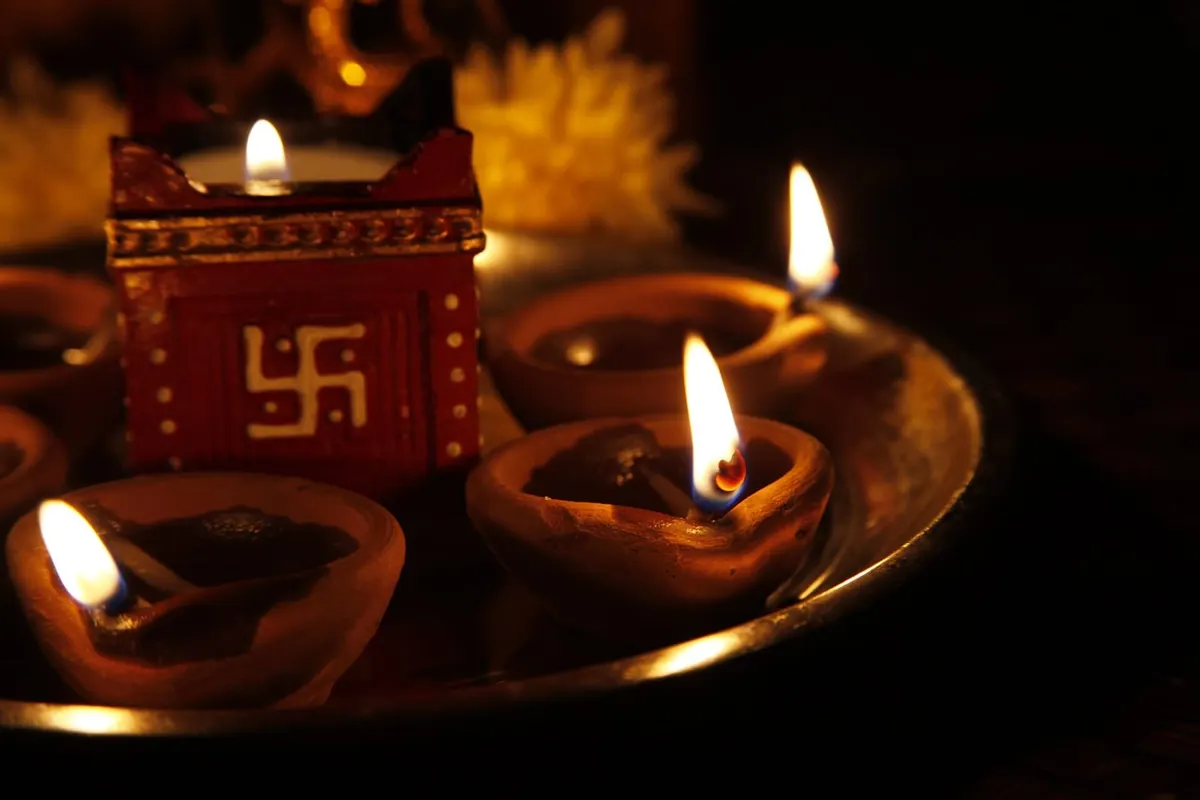
Diwali — the festival of lights — is the most celebrated festival in Hinduism. The central ritual of Diwali is the Lakshmi-Ganesh Puja performed on the Amavasya (new moon) night. This guide walks you through the complete puja vidhi, from preparation to conclusion.
When to Perform Diwali Puja
The ideal time for Diwali puja is during the Pradosh Kaal on the Amavasya night — the period after sunset. The most auspicious window is the Lakshmi Muhurat, which is typically announced by panchang experts each year.
General guideline: Perform the puja after sunset but before midnight on the main Diwali day.
Puja Samagri (Materials Needed)
Gather these items before the puja:
Essential Items
- Ganesh and Lakshmi murti (idols or framed images)
- Red cloth for the puja chowki (platform)
- Kalash (copper or brass pot) filled with water
- Mango leaves and a coconut for the kalash
- Rice (akshata) — uncooked, preferably colored with turmeric
- Turmeric (haldi) and kumkum (sindoor)
- Fresh flowers — marigold and lotus preferred
- Incense (agarbatti) and dhoop
- Ghee diya (lamp) — at least 2
- Camphor (kapoor)
- Panchamrit (milk, curd, ghee, honey, sugar)
- Fruits — banana, apple, pomegranate
- Sweets — especially those made with ghee (laddoo, barfi)
- Betel leaves (paan) and supari (betel nut)
- Coins (old and new) and currency notes
- Sandalwood paste (chandan)
For Lakshmi Puja Specifically
- Lotus flower (or lotus-shaped diya)
- Kamal Gatta mala (lotus seed garland) — 108 beads
- Silver coin (if available)
- Account books / business ledger (traditional practice)
Step-by-Step Puja Vidhi
Step 1: Preparation (Sthapana)
- Clean the puja area — This should be done earlier in the day. The entire house should be clean and decorated.
- Set up the chowki — Place a wooden platform or table, cover with a red cloth.
- Draw a Swastika with turmeric or kumkum on the cloth.
- Place the idols — Ganesh on the left, Lakshmi on the right (from the devotee’s perspective).
- Set up the Kalash — Fill with water, place 5 mango leaves at the rim, place a coconut on top. This represents the universe.
- Spread rice grains around the idols.
- Place the account books near the idols (for business owners).
- Light the diyas — At least one ghee diya should remain lit through the puja.
Step 2: Ganesh Puja (Always First)
Lord Ganesh is always worshipped first in any Hindu ceremony. He removes obstacles and ensures the puja proceeds smoothly.
- Dhyana — Close your eyes, meditate on Ganesh’s form.
- Avahana — Invite Ganesh into the murti: “Om Gan Ganapataye Namah. Shri Ganeshaya Avahayami.”
- Offer flowers while chanting: “Om Gan Ganapataye Namah Pushpam Samarpayami.”
- Apply tilak — Turmeric and kumkum on the murti.
- Offer modak or laddoo — Ganesh’s favorite sweet.
- Chant the Ganesh mantra 21 times: “Om Gan Ganapataye Namah.”
- Aarti — Perform Ganesh aarti with the ghee diya.
Step 3: Lakshmi Puja (Main Ritual)
- Dhyana — Meditate on Maa Lakshmi seated on a lotus, golden in complexion, showering blessings.
- Avahana — “Om Shreem Mahalakshmiyei Namah. Shri Lakshmiyai Avahayami.”
- Panchamrit Snan — Bathe the Lakshmi murti with panchamrit (milk, curd, ghee, honey, sugar), then clean water.
- Vastra — Offer a red cloth or thread.
- Shringar — Apply sindoor, offer bangles and jewelry to the murti.
- Pushpa — Offer lotus flowers (or marigold): “Om Shreem Mahalakshmiyei Namah Pushpam Samarpayami.”
- Dhoop and Deep — Light incense and the diya.
- Naivedya — Offer sweets, fruits, and paan.
- Chant Lakshmi Mantra 108 times using the Kamal Gatta mala: “Om Shreem Mahalakshmiyei Namah”
- Read or recite the Sri Sukta (Rig Veda hymn to Lakshmi) if you know it.
Step 4: Kuber Puja
Since Lakshmi puja is about invoking prosperity, Kuber — the treasurer of the gods — is also worshipped.
- Place coins and currency notes near the Lakshmi murti.
- Apply turmeric and kumkum to the coins.
- Chant: “Om Yakshaya Kuberaya Vaishravanaya Dhana Dhanyadi Padaye Dhana Dhanya Samruddhim Me Dehi Dapaya Swaha.”
- Offer flowers and akshata.
Step 5: Aarti and Conclusion
- Perform Lakshmi Aarti — “Om Jai Lakshmi Mata” with the camphor diya, circling clockwise.
- Offer prayers — Express your gratitude and intentions for the coming year.
- Distribute prasad — Share the sweets and fruits with family.
- Light diyas around the home — The tradition of placing diyas at windows, doorways, and around the house.
- Keep one diya burning through the night if possible — symbolizing Lakshmi’s continuous presence.
Important Do’s and Don’ts
Do:
- Clean the entire house before Diwali — Lakshmi enters clean homes
- Keep the main door open during puja — inviting Lakshmi in
- Use ghee diyas (not oil diyas) for the main puja
- Include all family members in the puja
- Chant with devotion — even if pronunciation is imperfect, sincerity matters
Don’t:
- Don’t use broken or chipped utensils
- Don’t point your feet toward the puja area
- Don’t leave the house completely dark on Diwali night
- Don’t argue or speak harshly during the puja
- Don’t rush — the puja should feel unhurried and reverent
After the Puja
- Rangoli at the entrance invites prosperity
- Fireworks and crackers (optional, be mindful of pollution and animals)
- Visit neighbors and share sweets
- Gambling (a small, symbolic card game) is traditional on Diwali night in many families — it represents the cosmic game of chance and Lakshmi’s favor
Using Digital Tools for Diwali
Track your 108 mantra repetitions during the puja with our Naam Jaap Counter — especially useful when chanting the Lakshmi mantra rounds.
Shubh Deepavali! May Maa Lakshmi bless your home with light, prosperity, and joy.
Start your digital sadhana today.
Track your mantra practice with our free Naam Jaap Counter.
Open Naam Jaap Counter →