Tulsi Mala vs Rudraksha Mala — Which Is Right for Your Japa Practice?
A detailed comparison of Tulsi and Rudraksha malas for mantra chanting. Learn which mala suits which deity, mantra, and spiritual goal, plus care tips and how to choose.
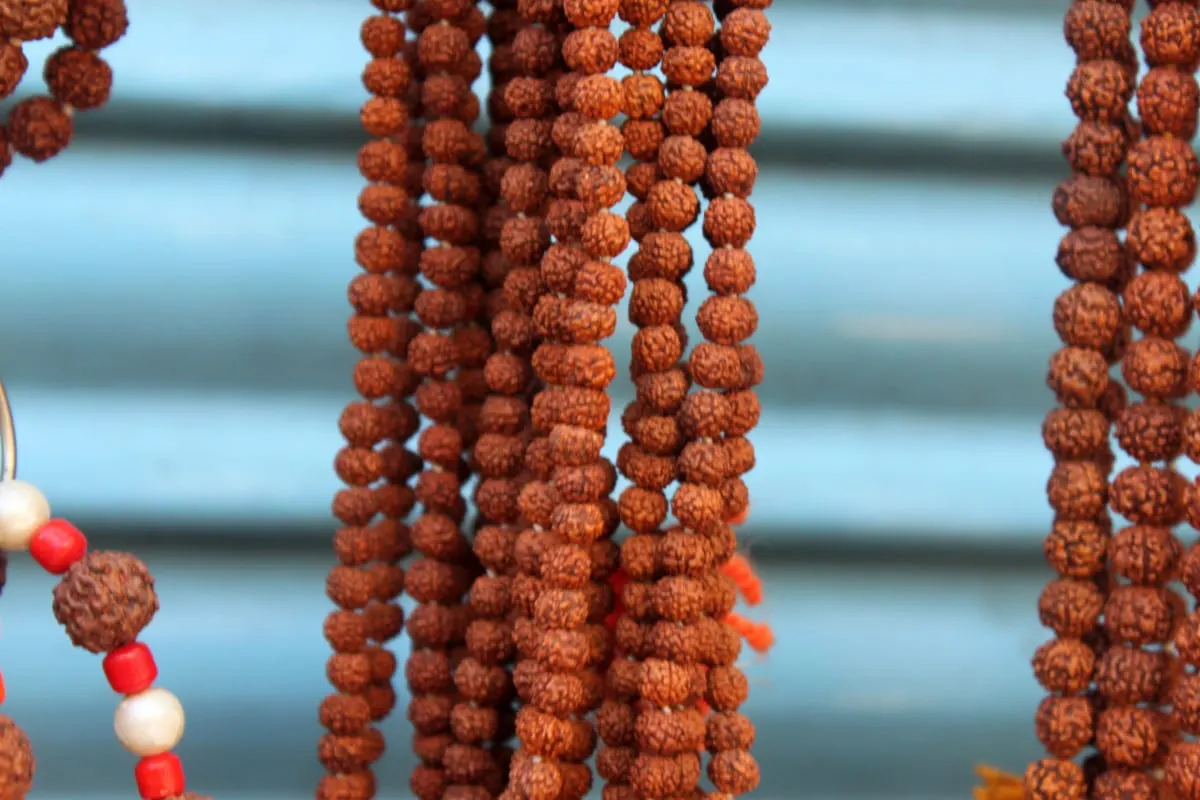
Every serious japa practitioner eventually faces this question: should I use a Tulsi mala or a Rudraksha mala? The answer is not about one being superior to the other. Each mala carries a distinct spiritual lineage, serves different deities and mantras, and suits different temperaments. This guide breaks down everything you need to make an informed choice.
What Is a Japa Mala?
A japa mala is a string of 108 beads used to count mantra repetitions during meditation and prayer. The 108th bead leads to the Sumeru (also called Meru) — a larger bead that marks the starting and ending point of one round. The Sumeru is never crossed; when you finish a round, you reverse direction and begin the next.
The number 108 holds deep significance across Hindu cosmology, astronomy, and sacred geometry. If you want to understand why 108 and not some other number, read our detailed breakdown in 108 vs 1008 — Which Mala Count Is Right for You?.
The mala is not merely a counting device. It is a sacred object charged through regular use, and the material it is made from directly influences the energy of your practice.
Tulsi Mala — The Sacred Basil Rosary
Origin and Significance
Tulsi (Ocimum tenuiflorum), or holy basil, is considered the earthly manifestation of Goddess Vrinda (also known as Tulsi Devi), one of the greatest devotees of Lord Vishnu. According to the Padma Purana, Tulsi is Vishnu’s most beloved plant, and any worship of Vishnu or His avatars is considered incomplete without Tulsi.
The wood of the Tulsi plant, once dried and carved into beads, becomes one of the most revered materials for japa malas in Vaishnavism.
Deity Association
Tulsi mala is directly connected to the Vaishnava tradition — the worship of Lord Vishnu and His avatars:
- Lord Vishnu — all Vishnu mantras and sahasranama
- Lord Krishna — Hare Krishna Maha Mantra, Om Namo Bhagavate Vasudevaya
- Lord Rama — Sri Ram Jay Ram Jay Jay Ram, Om Sri Ramaya Namah
- Lord Hanuman — as a devotee of Rama, Hanuman mantras pair well with Tulsi
Benefits
- Purifying effect: Tulsi is considered sattvic (pure). Wearing or using it is said to purify the mind, body, and speech.
- Cooling energy: Tulsi beads carry a calming, devotional vibration suited to bhakti practice.
- Health properties: Ayurveda recognizes Tulsi as an adaptogen. Traditionally, wearing Tulsi near the skin is believed to support immunity and reduce stress.
- Accessibility: Tulsi malas are widely available and affordable compared to authentic Rudraksha.
Who Should Use a Tulsi Mala?
- Devotees of Vishnu, Krishna, Rama, or Hanuman
- Practitioners of the Hare Krishna Maha Mantra
- Anyone following a Vaishnava guru’s initiation
- Beginners looking for a gentle, sattvic entry into japa practice
- Those who prefer a lightweight mala for extended chanting sessions
Rudraksha Mala — Tears of Shiva
Origin and Significance
The word Rudraksha comes from Rudra (a name for Lord Shiva) and Aksha (eye or tear). According to the Shiva Purana, Lord Shiva once entered deep meditation for the welfare of all beings. When He opened His eyes, tears of compassion fell to the earth and became Rudraksha trees (Elaeocarpus ganitrus).
Rudraksha beads have been central to Shaiva traditions for thousands of years. The Jabala Upanishad and the Rudraksha Jabala Upanishad both describe the spiritual merits of wearing and using Rudraksha in japa.
Mukhi Types — A Brief Overview
Each Rudraksha bead has natural facets called mukhis (faces), formed by the lines running from top to bottom. The number of mukhis determines the bead’s properties:
- 1 Mukhi — Represents Shiva Himself. Extremely rare. Used for moksha-oriented sadhana.
- 5 Mukhi — The most common and widely used. Represents Kalagni Rudra. Ideal for general japa and daily wear.
- 2 Mukhi — Represents Ardhanarishvara (Shiva-Parvati). Good for harmony and relationships.
- 4 Mukhi — Represents Brahma. Beneficial for students and knowledge seekers.
- 7 Mukhi — Represents Goddess Lakshmi. Used for prosperity mantras.
- 14 Mukhi — Represents Lord Hanuman (Dev Mani). Rare and powerful.
For standard japa practice, a mala of 5 Mukhi Rudraksha beads is the traditional and most recommended choice.
Benefits
- Electromagnetic properties: Rudraksha beads have measurable bioelectric effects. Research from the Indian Institute of Technology (IIT) Varanasi has shown that Rudraksha beads create a subtle electromagnetic field that can influence heart rate and stress response.
- Grounding energy: Unlike the cooling nature of Tulsi, Rudraksha carries a more intense, grounding vibration suited to Shaiva and Shakta practices.
- Durability: A genuine Rudraksha mala, properly cared for, lasts decades or even a lifetime.
- Versatility: While most associated with Shiva, Rudraksha is also accepted across many traditions including Shakta and even some Vaishnava lineages.
Who Should Use a Rudraksha Mala?
- Devotees of Lord Shiva and Goddess Parvati/Durga
- Practitioners of Om Namah Shivaya, Maha Mrityunjaya Mantra, or Rudra mantras
- Those following Shakta traditions (Durga, Kali, Chamunda mantras)
- Practitioners seeking intense focus during meditation
- Advanced sadhakas doing extended mantra anushthana (prolonged practice commitments)
Comparison Table
| Feature | Tulsi Mala | Rudraksha Mala |
|---|---|---|
| Material | Dried Tulsi (holy basil) wood | Rudraksha seed (Elaeocarpus ganitrus) |
| Primary Deity | Vishnu, Krishna, Rama | Shiva, Durga, Kali |
| Tradition | Vaishnavism | Shaivism, Shaktism |
| Energy Quality | Sattvic, cooling, devotional | Grounding, intense, protective |
| Mantra Type | Vishnu mantras, Maha Mantra, Ram Naam | Shiva mantras, Shakti mantras, Rudra Gayatri |
| Weight | Very light | Heavier (varies by bead size) |
| Durability | Moderate (2-5 years with care) | High (decades with care) |
| Cost | Affordable | Moderate to expensive (depends on mukhi) |
| Water Contact | Avoid prolonged soaking | Periodic oiling recommended |
| Wearing as Necklace | Common in Vaishnava tradition | Common in Shaiva tradition |
Which Mala for Which Mantra?
This is the practical question most practitioners need answered. Here is a straightforward guide:
Use Tulsi Mala For
- Hare Krishna Maha Mantra — Hare Krishna Hare Krishna, Krishna Krishna Hare Hare, Hare Rama Hare Rama, Rama Rama Hare Hare
- Ram Naam Jaap — Sri Ram Jay Ram Jay Jay Ram
- Om Namo Bhagavate Vasudevaya — the 12-syllable Vishnu mantra
- Om Namo Narayanaya — the 8-syllable Narayana mantra
- Vishnu Sahasranama — recitation of Vishnu’s 1000 names
- Hanuman Chalisa counting — when counting repetitions of the full Chalisa
Use Rudraksha Mala For
- Om Namah Shivaya — the Panchakshari (five-syllable) Shiva mantra
- Maha Mrityunjaya Mantra — Om Tryambakam Yajamahe…
- Rudra Gayatri — Om Tatpurushaya Vidmahe…
- Om Dum Durgayei Namah — Durga Beej mantra
- Om Kreem Kalikayei Namah — Kali Beej mantra
- Om Gan Ganapataye Namah — Ganesh mantra (Rudraksha is acceptable; 14 Mukhi is specifically Ganesh-linked)
Either Mala Works For
- Om — the universal pranava mantra
- Gayatri Mantra — Om Bhur Bhuva Swaha… (some traditions prefer specific materials, but both are accepted)
- Om Shreem Mahalakshmiyei Namah — Lakshmi mantra (Tulsi slightly preferred, but 7 Mukhi Rudraksha is also traditional)
- Guru Mantra — follow your guru’s specific instruction
When in doubt, follow the guidance of your guru or sampradaya (lineage). If you have no guru, a 5 Mukhi Rudraksha mala is the safest universal choice, while a Tulsi mala is the natural choice if you lean toward Krishna or Rama bhakti.
Care and Maintenance
Tulsi Mala Care
- Keep it dry. Tulsi wood absorbs moisture. Remove before bathing or swimming.
- Oil occasionally. Apply a thin layer of sandalwood oil or sesame oil every few months to prevent cracking.
- Store in a clean cloth bag. A silk or cotton pouch protects the beads from dust and physical damage.
- Avoid chemicals. Perfume, soap, and hand sanitizer degrade the wood over time.
- Replace when beads crack. A mala with broken beads should be respectfully immersed in a river or placed at the base of a Tulsi plant and replaced.
Rudraksha Mala Care
- Oil regularly. Soak the mala in mustard oil or olive oil overnight once a month. This prevents drying and cracking.
- Avoid soap and chemicals. Clean only with water and a soft brush if needed.
- Wear it. Rudraksha benefits from contact with your skin. The natural oils from your body help maintain the beads.
- Remove during impure activities. Tradition recommends removing Rudraksha before visiting a cremation ground, during consumption of alcohol or non-vegetarian food, or during intimate contact.
- Test authenticity. A genuine Rudraksha sinks in water, has well-defined natural mukhis, and does not have artificial cuts or joins. Beware of fake beads made from wood or plastic.
General Rules for Both
- Always store your mala in a dedicated, clean place — a pouch or a small box on your altar.
- Do not lend your personal japa mala to others. It carries your accumulated spiritual energy.
- Handle the mala with your right hand. Use the thumb and middle finger to advance beads; the index finger should not touch the mala.
Complementing Your Mala with a Digital Counter
A physical mala is irreplaceable for the tactile, meditative experience of japa. But there are situations where carrying a mala is not practical — during commutes, at work, or while travelling.
A digital japa counter lets you maintain your daily count without interruption. You can track your progress across days and weeks, set targets for specific anushthanas, and keep an accurate record of your sadhana. Our Naam Jaap Counter is designed specifically for this purpose — a clean, distraction-free counter that respects the sanctity of the practice.
The ideal approach: use your physical Tulsi or Rudraksha mala during your dedicated morning and evening practice, and use a digital counter for supplementary japa throughout the day.
Final Thoughts
The mala you choose is a personal expression of your devotional path. A Tulsi mala draws you into the tender, loving bhakti of Vishnu and His avatars. A Rudraksha mala connects you to the raw, transformative power of Shiva and Shakti. Neither is better in an absolute sense — both are time-tested, scripturally endorsed instruments of spiritual practice.
What matters most is not which mala you hold, but that you hold it daily. Consistent japa, done with sincerity and attention, will bring clarity regardless of the material between your fingers. Pick the mala that aligns with your heart, and begin.
Start your digital sadhana today.
Track your mantra practice with our free Naam Jaap Counter.
Open Naam Jaap Counter →