Krishna — Janmashtami Significance & Hare Krishna Maha-Mantra Guide
Understanding the significance of Janmashtami, the power of the Hare Krishna maha-mantra, and how to incorporate Krishna devotion into daily life.
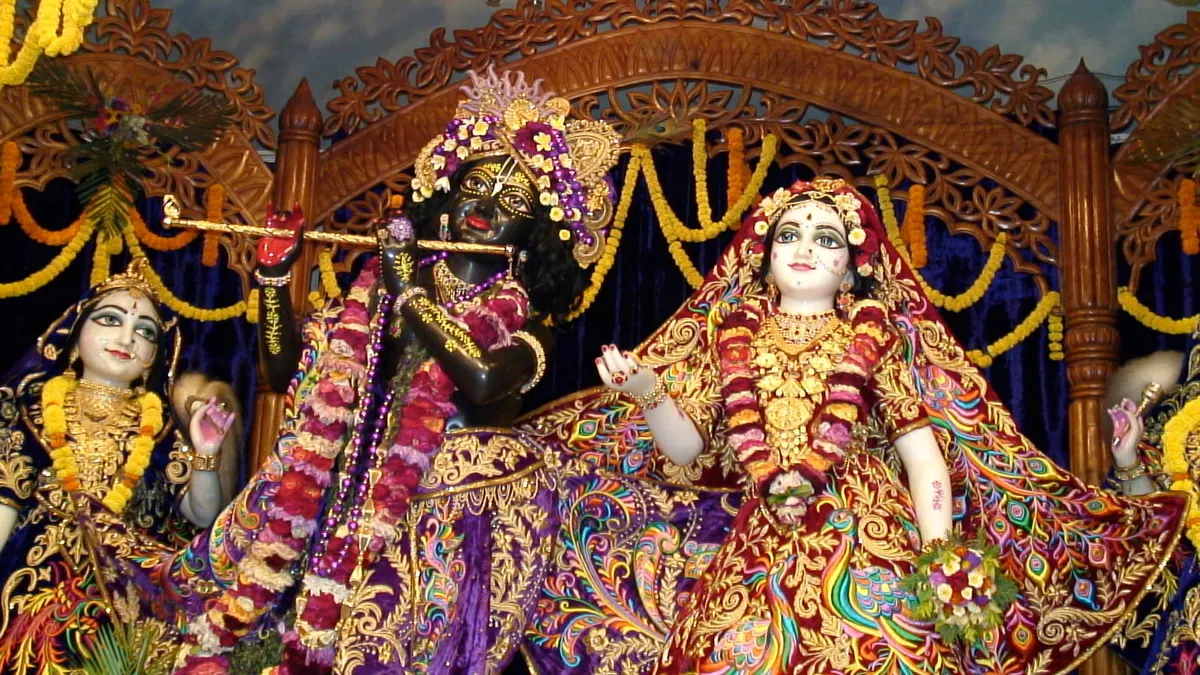
Lord Krishna — the Supreme Personality of Godhead in Vaishnavism, the divine charioteer of Arjuna, the butter-stealing child of Vrindavan, the enchanting flute player — is perhaps the most beloved deity in Hinduism. His life, teachings, and the maha-mantra associated with him have touched millions worldwide.
The Hare Krishna Maha-Mantra
“Hare Krishna Hare Krishna, Krishna Krishna Hare Hare, Hare Rama Hare Rama, Rama Rama Hare Hare”
This 16-word, 32-syllable mantra is called the Maha-Mantra — the great mantra for deliverance. It appears in the Kali-Santarana Upanishad, where Lord Brahma tells the sage Narada that this mantra is the only remedy for the degradation of Kali Yuga.
Meaning of Each Word
- Hare — An invocation to Hara (Radha), the divine feminine energy of the Lord
- Krishna — The all-attractive Supreme Person
- Rama — The reservoir of all pleasure (also refers to Lord Rama, the avatar of Vishnu)
The mantra is essentially a prayer: “O Divine Energy, O All-Attractive One, O Source of All Joy — please engage me in Your devotional service.”
How to Chant
With a Mala (Japa):
- Use a tulsi (holy basil) wood mala with 108 beads
- Hold in the right hand, between thumb and middle finger
- Chant the full mantra once per bead
- One round = 108 repetitions ≈ 7–8 minutes
- Recommended minimum: 16 rounds daily (traditional ISKCON standard)
- Beginners: Start with 1–4 rounds and increase gradually
Kirtan (Congregational Singing): The maha-mantra is also chanted as kirtan — group singing with musical instruments. This is considered even more powerful than individual japa, as stated by Chaitanya Mahaprabhu.
Janmashtami — The Birthday of Krishna
Krishna Janmashtami falls on the Ashtami (8th day) of Krishna Paksha in the month of Bhadrapada (August/September). It celebrates Krishna’s birth at midnight in the prison of Mathura.
How to Observe Janmashtami
Fasting:
- Fast from sunrise until midnight (the moment of Krishna’s birth)
- Fruits, milk, and water are permitted during the day
- Complete nirjala (waterless) fast is observed by some
- Break the fast at midnight after the puja, or the next morning during Parana window
The Midnight Celebration:
- Decoration: Decorate the home and puja area. Create a jhanki (tableau) of baby Krishna
- Evening Program: Begin with bhajans and kirtan after sunset
- Abhishek: At midnight, bathe the Krishna murti with panchamrit
- Aarti: Perform aarti with ghee diya, conch shell, and bells
- Prasad: Offer 56 bhog items (Chhappan Bhog) — or at least kheer, butter, makhan mishri
- Dahi Handi: In Maharashtra, the tradition of breaking a clay pot of curd hung high — symbolizing young Krishna’s butter-stealing exploits
Significance
Janmashtami is not merely a birthday celebration — it commemorates the descent of the divine into the material world to:
- Protect dharma and destroy adharma (Bhagavad Gita 4.7-8)
- Demonstrate divine lila (play) that enchants the soul
- Establish the path of Bhakti Yoga as accessible to all
Key Teachings of Krishna
From the Bhagavad Gita
On Action (Karma Yoga): “You have a right to perform your prescribed duties, but you are not entitled to the fruits of your actions.” (2.47)
On Devotion (Bhakti Yoga): “Whoever offers Me with devotion a leaf, a flower, a fruit, or water — I accept that offering made with love.” (9.26)
On Equanimity: “One who is equal to friends and enemies, who is equipoised in honor and dishonor, heat and cold, happiness and distress — such a devotee is very dear to Me.” (12.18)
On Surrender: “Abandon all varieties of dharma and simply surrender unto Me. I shall deliver you from all sinful reactions. Do not fear.” (18.66)
From Krishna’s Life
- As a child in Vrindavan: Teaches us that God is playful, accessible, and full of love
- As a friend to the Pandavas: Demonstrates divine friendship and loyalty
- As the charioteer in Kurukshetra: Shows that God serves His devotees
- As a statesman in Dwaraka: Demonstrates that spirituality and worldly responsibility coexist
Daily Krishna Worship
Morning Practice
- Wake early and bathe
- Offer fresh tulsi leaves and water to Krishna murti
- Chant the maha-mantra — minimum 1 round of 108
- Read one verse from the Bhagavad Gita with commentary
Food Offering
In Krishna bhakti, all food is first offered to Krishna before eating:
- Prepare vegetarian food with love
- Place a portion before Krishna’s image
- Chant the offering prayer: “Om Namo Bhagavate Vasudevaya”
- Wait a few minutes, then accept as prasadam
Wednesday and Janmashtami
While Krishna can be worshipped any day, Wednesdays (Budhvar) and the monthly Ashtami are particularly associated with Krishna worship.
Krishna Mantras
| Mantra | Use |
|---|---|
| Hare Krishna Maha-Mantra | Daily chanting, the supreme mantra |
| Om Namo Bhagavate Vasudevaya | 12-syllable Vishnu/Krishna mantra, for meditation |
| Om Krishnaya Namah | Simple devotional invocation |
| Gopala Mantra | ”Om Namo Bhagavate Vasudevaya” — for peace and protection |
| Krishna Gayatri | ”Om Damodaraya Vidmahe, Vasudevaya Dhimahi, Tanno Krishna Prachodayat” |
Track Your Maha-Mantra Rounds
Tracking your daily maha-mantra rounds builds consistency and devotion. Use our Naam Jaap Counter to count rounds, set daily targets, and maintain your sadhana streak.
Hare Krishna!
Sources
- Bhagavata Purana, Canto 10 — Krishna’s birth and the Vrindavan narratives.
- Bhagavad Gita — the teachings quoted in the article.
- Kali-Santarana Upanishad — the Hare Krishna Maha Mantra.
Start your digital sadhana today.
Track your mantra practice with our free Naam Jaap Counter.
Open Naam Jaap Counter →