Daily Puja Vidhi — Morning & Evening Home Worship Guide
A complete step-by-step guide to performing daily puja at home. Learn the correct morning and evening worship sequence, essential samagri, mantras, and tips for building a consistent practice.
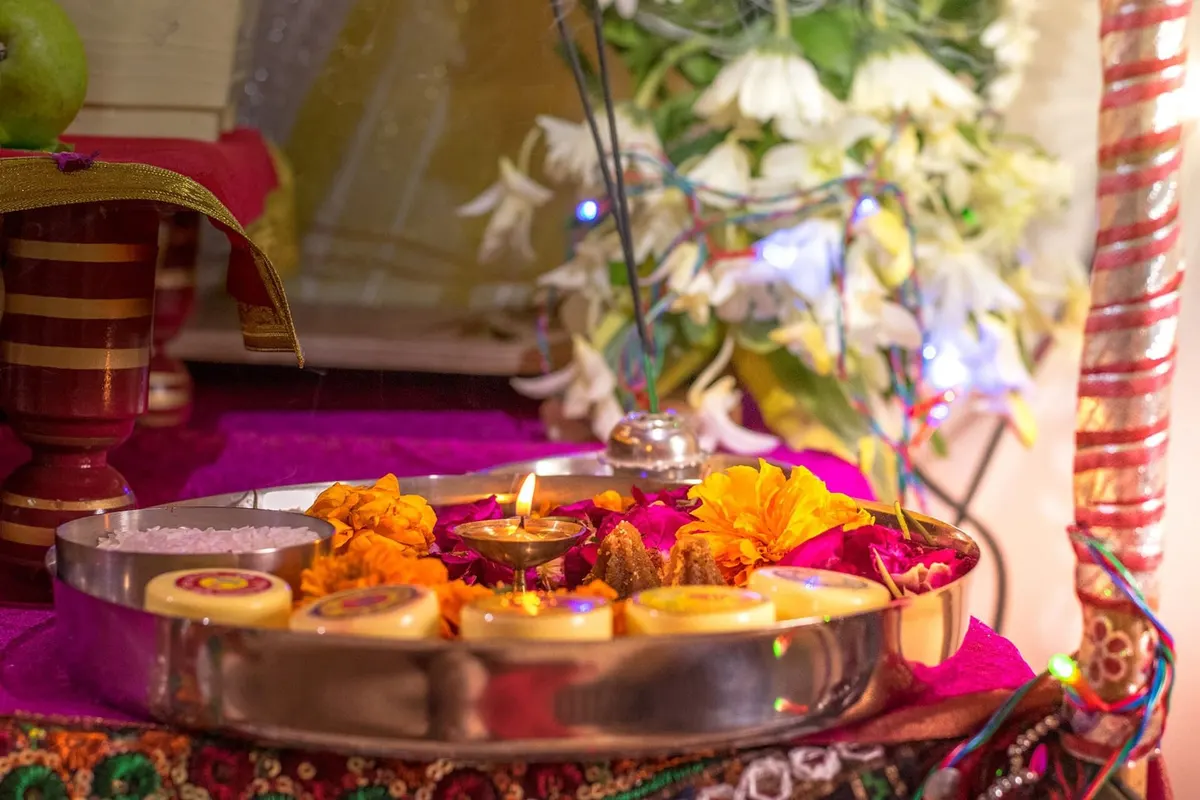
A home without daily puja is like a body without breath. In the Hindu tradition, nitya puja (daily worship) is not reserved for pandits or temples alone — it is the sacred duty and privilege of every grihastha (householder). Whether you chant for five minutes or perform an elaborate hour-long ritual, the act of connecting with the Divine each morning and evening transforms ordinary life into sadhana.
This guide covers everything you need to set up a home mandir and perform daily morning and evening puja correctly, even if you are starting from scratch.
Why Daily Puja Matters
The shastras are clear: regularity in worship matters more than complexity. A simple diya lit with devotion every day carries more spiritual weight than an elaborate puja done once a year.
Daily puja serves multiple purposes:
- Spiritual discipline (sadhana) — It anchors your day in awareness of the Divine.
- Mental clarity — The ritual sequence calms the mind before the day’s demands begin.
- Sanctifying the home — Regular worship generates positive energy (sattvik vibrations) throughout the household.
- Family tradition — Children who grow up watching daily puja absorb sanskar naturally.
- Karmic purification — Offerings made with devotion gradually reduce the burden of past karma.
The Bhagavad Gita (9.26) assures us: “Whoever offers Me a leaf, a flower, a fruit, or water with devotion — I accept that offering of love.” No elaborate setup is necessary. Sincerity is the only requirement.
Setting Up Your Home Mandir
Before beginning daily puja, you need a dedicated worship space. This does not require an entire room — a clean shelf, a wooden cabinet, or a small corner table works perfectly.
Guidelines for Placement
- Direction — The mandir should ideally face east or north. The devotee should face east or north while praying.
- Location — Place it in a clean, quiet area. Avoid placing the mandir in a bedroom if possible; a living room or a dedicated puja room is best.
- Height — The deity’s face should be roughly at your eye level when seated for worship.
- Cleanliness — The mandir area should be wiped daily. Never let dust accumulate on the murtis or images.
Choosing Deities
For daily worship, keep the mandir focused. A typical Hindu household mandir includes:
- Ishta Devata — Your primary chosen deity (Shiva, Vishnu, Devi, Ganesh, etc.)
- Kul Devata — Family deity, if known
- Ganesh — Always worthy of first worship in any setting
Avoid overcrowding the mandir with too many murtis. Five to seven is a practical upper limit for daily worship.
Essential Puja Samagri (Daily Items)
You do not need a long shopping list for daily puja. Here is what to keep stocked:
| Item | Purpose |
|---|---|
| Ghee or oil diya with wicks | Jyoti (light offering) |
| Incense sticks (agarbatti) or dhoop | Fragrance offering |
| Camphor (kapoor) | Aarti |
| Kumkum and haldi | Tilak on deity and self |
| Uncooked rice (akshata) | Offering during prayer |
| Fresh flowers (when available) | Pushpa offering |
| Small bell (ghanti) | Rung during aarti and invocation |
| Water in a copper loti or achamani patra | Jal offering and achamana |
| Chandan (sandalwood paste or powder) | Applied to deity |
| Prasad — fruit, mishri, or batasha | Naivedya (food offering) |
| Match box or lighter | Lighting diya and dhoop |
Keep these items organized in a puja thali or a small basket near your mandir so the morning routine is seamless.
Morning Puja Vidhi — Step by Step
The morning puja is the primary worship of the day. Ideally perform it during Brahma Muhurta (roughly 4:30–6:00 AM) or shortly after sunrise. The key is consistency — same time each day.
Step 1: Snaan (Bathing) and Personal Purification
Always bathe before puja. At minimum, wash your hands, feet, and face. Wear clean clothes — ideally cotton, in white, yellow, or any sattvik color.
Snaan Mantra:
Gange cha Yamune chaiva Godavari Sarasvati Narmade Sindhu Kaveri jalesmin sannidhim kuru
This mantra invokes the seven sacred rivers into your bathing water.
Step 2: Achamana (Sipping Water for Inner Purification)
Sit before the mandir. Take a small spoonful of water in your right palm and sip three times, reciting:
Om Achyutaya Namah Om Anantaya Namah Om Govindaya Namah
This purifies the subtle body and signals the beginning of worship.
Step 3: Sankalp (Intention)
Join your palms and state your sankalp — a simple declaration of what you are doing:
“I am performing this daily puja for the grace of [deity name], for the wellbeing of my family, and for spiritual progress.”
You can say this in your own language. The intention matters, not the script.
Step 4: Diya and Dhoop (Light and Fragrance)
- Light the ghee diya and place it to the right of the deity.
- Light the incense or dhoop stick and gently wave it before the murti in a clockwise circle three times.
Diya Mantra:
Shubham karoti kalyanam, arogyam dhana sampadah Shatru buddhi vinashaya, deepa jyotir namostute
Step 5: Tilak and Pushpa (Adornment)
Apply kumkum, chandan, or haldi tilak to the deity. Offer fresh flowers at the deity’s feet. If flowers are unavailable, offer a few grains of rice (akshata) or a tulsi leaf for Vishnu/Krishna.
Step 6: Jal Offering and Naivedya
Offer water by pouring a small amount from the loti into a separate small bowl placed before the deity. Then place the prasad (fruit, mishri, batasha, or a small portion of freshly cooked food) before the deity with folded hands.
Naivedya Mantra:
Om Pranaya Swaha, Om Apanaya Swaha, Om Vyanaya Swaha Om Udanaya Swaha, Om Samanaya Swaha Om Brahmane Swaha
Step 7: Aarti
Ring the bell with your left hand. Hold the lit camphor or diya in your right hand and move it clockwise before the deity — three circles at the feet, three at the navel, three at the face, and one full circle around the entire murti.
Sing or recite the aarti of your Ishta Devata. Common daily aartis:
- Om Jai Jagdish Hare — universal, suitable for all deities
- Om Jai Shiv Omkara — for Shiva devotees
- Om Jai Lakshmi Mata — for Lakshmi devotees
- Aarti Kunj Bihari Ki — for Krishna devotees
Step 8: Mantra Jaap and Prarthana
After aarti, sit quietly and chant your chosen mantra. A minimum of one mala (108 repetitions) is recommended for daily practice. Common daily mantras:
- Om Namah Shivaya — Panchakshari mantra of Shiva
- Om Namo Bhagavate Vasudevaya — Dvadasakshari mantra of Vishnu
- Om Shri Ganeshaya Namah — for Ganesh
- Gayatri Mantra — universal, suitable for all
If you do not have a physical jaap mala, you can use the Naam Jaap Counter to track your daily chanting count and build a consistent jaap practice.
Conclude with a heartfelt prayer in your own words, asking for guidance and expressing gratitude.
Step 9: Pradakshina and Pranam
Perform three mental or physical pradakshinas (circumambulations). If space does not permit walking around the mandir, turn clockwise in place three times. End with a full pranam (prostration or deep bow).
Kshama Prarthana (Forgiveness Prayer):
Mantra heenam, kriya heenam, bhakti heenam Sureshwara Yat pujitam maya Deva, paripoornam tad astu me
“O Lord, whatever was lacking in mantra, action, or devotion in my worship — may You make it complete.”
This prayer ensures that any inadvertent mistakes in the ritual do not diminish the offering.
Evening Puja — Sandhya Diya and Aarti
The evening puja is shorter but equally important. It is performed at sandhya kaal — the transition period around sunset. In most households, this means between 6:00 and 7:30 PM.
Evening Sequence
- Wash hands and feet before approaching the mandir.
- Light the evening diya — This is non-negotiable in Hindu tradition. A lit diya at sandhya kaal dispels negative energy and invites Lakshmi into the home.
- Light incense or dhoop.
- Ring the bell and perform aarti — Sing Om Jai Jagdish Hare or your preferred aarti.
- Offer a brief prayer — Express gratitude for the day and seek protection for the night.
- Chant a short round of your mantra — Even 11 or 21 repetitions count. Track these easily with the Naam Jaap Counter if you want to maintain a daily log.
The evening diya should ideally remain lit until it extinguishes naturally. Many families also light a diya at the doorstep (outside the main entrance) at sandhya time.
Panchopachar and Shodashopachar Puja — A Brief Overview
Traditional puja formats are classified by the number of upachars (services) offered to the deity:
Panchopachar Puja (5 offerings) — The simplest formal format, ideal for daily use:
- Gandha — Sandalwood paste or kumkum
- Pushpa — Flowers
- Dhoop — Incense
- Diya — Light
- Naivedya — Food offering
If you are short on time, Panchopachar covers the essentials respectfully.
Shodashopachar Puja (16 offerings) — The elaborate format used for special occasions: Avahan (invocation), Aasan, Padya, Arghya, Achamana, Snaan, Vastra, Yagnopaveet, Gandha, Pushpa, Dhoop, Deep, Naivedya, Tambool, Dakshina, and Pradakshina. This format is typically reserved for festivals, Satyanarayan Katha, or special vratas rather than daily worship.
For daily purposes, the step-by-step sequence described in this guide covers and exceeds Panchopachar while remaining practical.
Tips for Busy People
Not everyone can dedicate 45 minutes every morning. Here is how to maintain daily puja even with a demanding schedule:
- Minimum viable puja — Light a diya, offer water, do one pranam. This takes under 2 minutes and still counts as daily worship.
- Fixed time, non-negotiable — Attach puja to an existing habit (right after brushing teeth, before morning tea). Consistency beats duration.
- Prepare the night before — Lay out the diya, matchbox, and incense so there is zero friction in the morning.
- Audio aarti — If you cannot sing, play a recording while you perform the diya aarti. The act of standing before God with a lit lamp is what matters.
- Weekend deep puja — Do a more elaborate puja on Sundays or your day off. Keep weekday puja short and focused.
- Involve family — Assign small tasks to children (ringing the bell, offering flowers). This reduces your load and builds their habit.
Building a Consistent Daily Practice
The hardest part of daily puja is not learning the steps — it is showing up every single day. Here is what works:
Start small. If you have never done daily puja before, begin with just the evening diya for one week. Add morning puja the next week. Add mantra jaap the week after. Gradual building lasts longer than ambitious starts that collapse within days.
Track your streak. Mark each day you complete puja on a calendar. A visible streak creates motivation to not break the chain.
Forgive missed days. Life happens. If you miss a day, simply resume the next morning without guilt. The shastras do not demand perfection — they honor sincere effort.
Deepen over time. Once the basic routine is established, gradually add elements: learn a new stotra each month, extend your mantra jaap count, observe Ekadashi or Pradosh vrat. Daily puja becomes the foundation upon which a rich spiritual life is built.
The Divine does not measure the grandeur of your puja thali. What is measured is the regularity of your remembrance and the sincerity of your surrender. Light that diya tomorrow morning — and then again the morning after that. That is the whole path.
Start your digital sadhana today.
Track your mantra practice with our free Naam Jaap Counter.
Open Naam Jaap Counter →